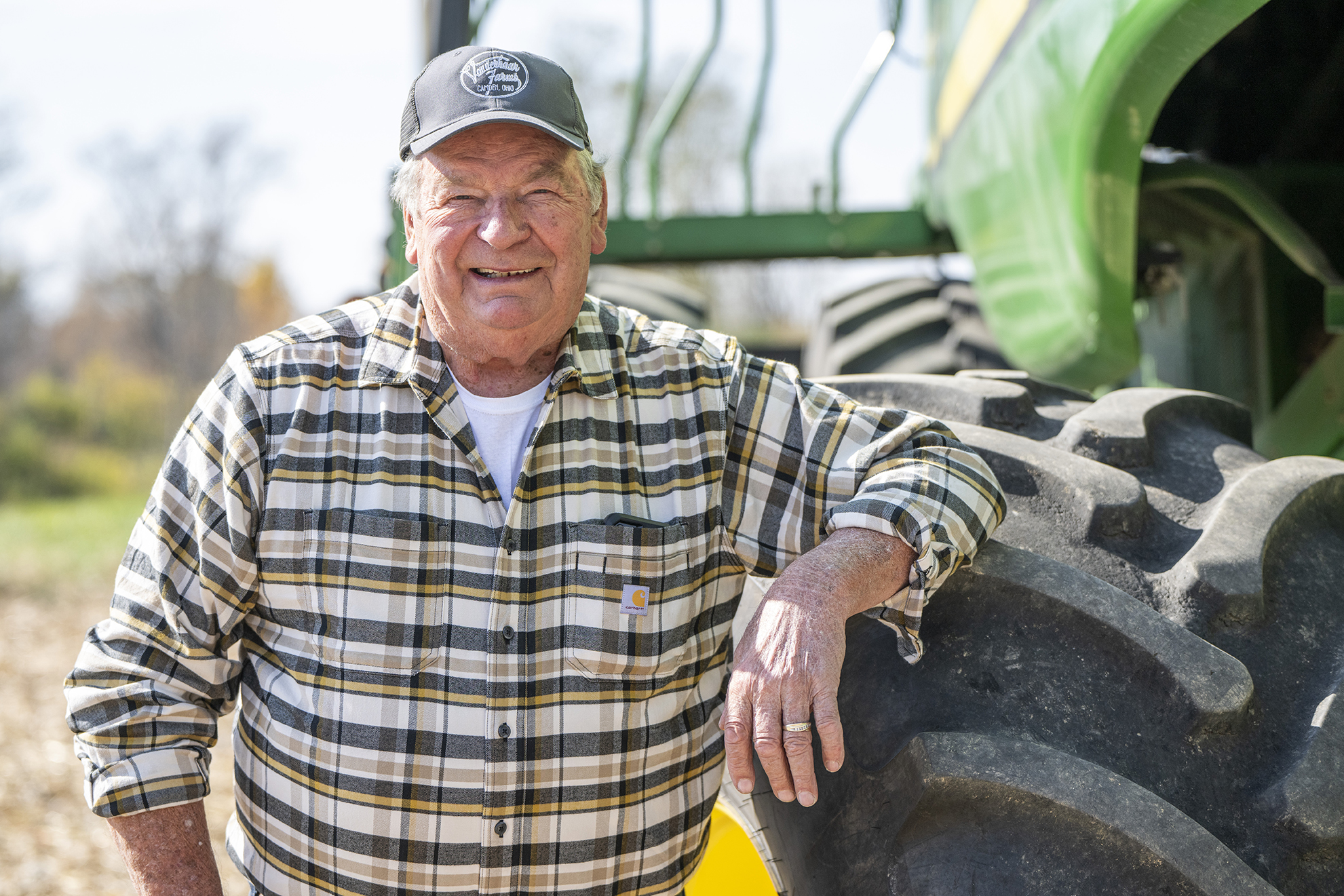
Bobby Moser:
The Farm Science Review is really, as we like to say it, it’s really the showcase of agriculture. And it’s all about bringing in the latest in technology. We have all kinds of people come: the small farmer, the large farmer, the middle-sized farmer. We have people that are not even farmers, but just enjoy this type of activity, come.
When you first come to the review, you go over to the exhibit area. That’s about 80 acres of nothing but exhibits. And companies will come in and set up their exhibit to show the latest that they’ve got to offer.
And then, what’s going on right now, are field demonstrations, so you can come out in one of our shuttles where we grow corn and soybeans and wheat. So you can see different kinds of equipment going--from different models and different makes--going down the field at the same time as they harvest soybeans or harvest corn. And the participants, the farmers will be able to get out in the field and actually walk right behind the tractor and watch what happens, and see that piece of equipment really put to use.
We also have the Gwynn Conservation area. This has developed over time to be one of the real popular sites at the review. You can see ponds, you can see wetlands, you can see bank stabilization, you can see prairie grass here, and different types of prairie grass, and how to establish those prairie grasses. There are many kind of things that you can see at the review.
Chuck Gamble:
We have approximately 600 exhibitors that represent 30 to 35 states and about all the provinces of Canada.
I always refer to it as the smorgasbord of agriculture, because we basically set the table for the producers across the state and in the adjoining states of Ohio.
The uniqueness of having that association and affiliation with Ohio State is that we can provide educational programs to help these producers perform better at what they do best. There are just a multitude of programs--from home-schoolers to high-schoolers to college students. We actually bring in groups of teachers from Columbus out to this site, to help them understand what agriculture is about today.
Lecturer in tent:
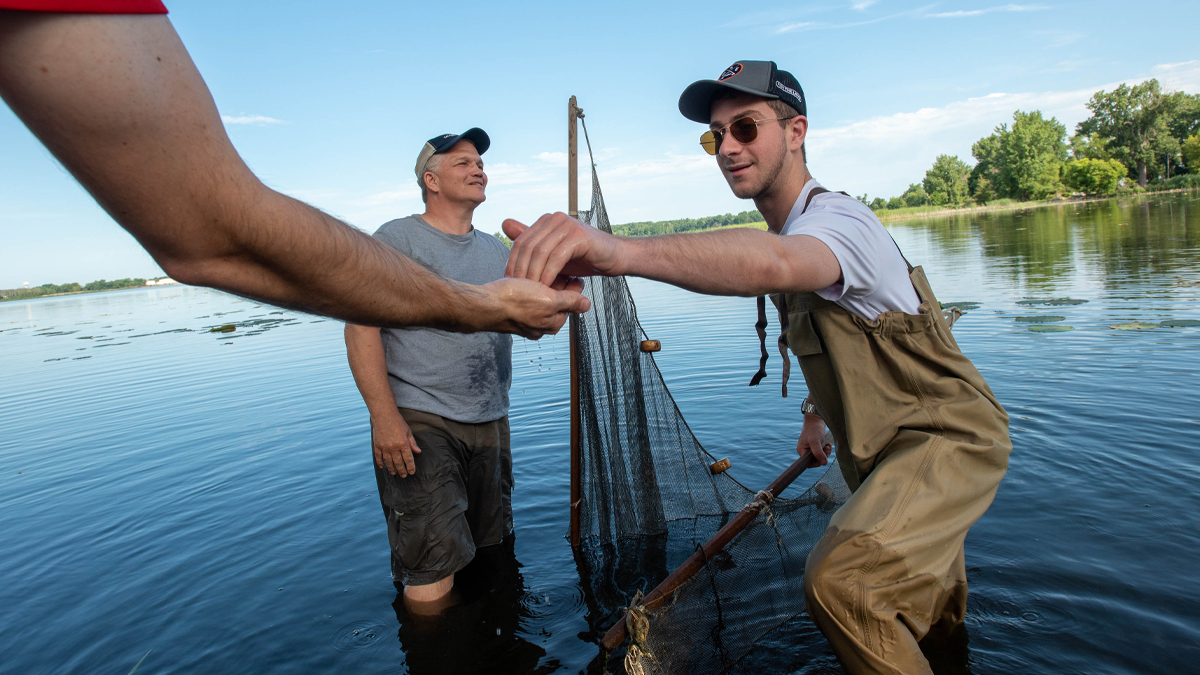
This system is what I call the fish farmer special. It’s got these expensive 55-gallon plastic drums on the top that are stuffed with bird batting, and then it has a little gravel filter here. And what happens is the water goes down the drain, the fish are in here.
Moser:
It’s very important to the Ohio economy. It’s the largest industry in the state. I would say food, agriculture, and natural resources system. It’s about an $80 billion industry. It generates about a million jobs a year.
I think the name itself depicts what we’re trying to get at. It’s not just a farm show, because we have educational programs going on as a part of our outreach effort. That’s one way how we fulfill our Land Grant mission, is taking the technology that’s developed, the latest technology, and getting it out into the hands of the people, and showing the science part of agriculture, whether that’s tillage, whether that’s GPS systems, or whether that’s how to conserve our natural resource base. There’s a science base in all that. We try to bring that to the forefront.