For five weeks, Ohio State students are immersed in Chinese culture through the Beijing Experience, a university study abroad program.
To view flash video, this browser needs the Flash 8 (or higher) plug-in
Transcript
Amber Jacks: When I first heard about China, I got an e-mail from my advisor and I was like, I've got to go. You know, I'm a Spanish major so I could go to Spain. That would be great. But it's so accessible. So I thought China would be a good experience to go and learn about something completely different than the West.
Professor Karen Mancl: You spend five weeks--so essentially half of the summer session--at the Chinese Academy of Agricultural Sciences. So we learned a great deal about rural China and some of the challenges right now of this country that's really changing very fast. We didn't have to speak Chinese to really have a chance to interact with the Chinese and the students who really took advantage of that, who would spend time with the Chinese graduate students who spoke English, some better than others--and if you spoke any Chinese at all you were able to walk around the neighborhood and interact with the people that were in the shops, and that was just a wonderful experience.
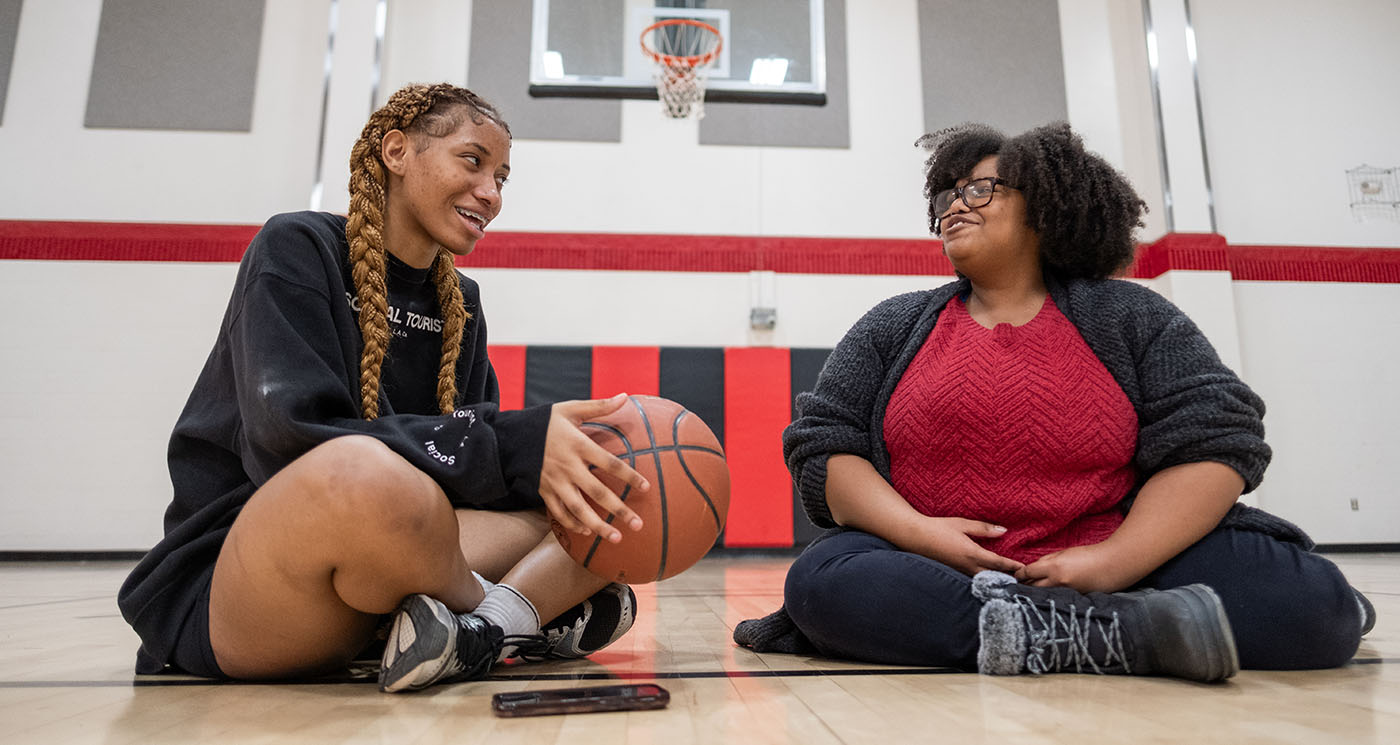
Jacks: You know, even when we were playing ping-pong or basketball we were teaching each other things and, you know, asking about, you know, what they did in school and what we did in school, and just, you know, normal things like that. Because they wanted to practice English and we wanted to learn Chinese, a lot of times it was just like, you know, playing with language all the time.
Mancl: There were graduate students from the academy that escorted us to the different sights around Beijing. So we went to the Forbidden City, we went to the Summer Palace, which was my favorite place and I can't wait to go back to spend more time there. We went to places like the Temple of Heaven, which is a real icon of the city of Beijing. We visited some of the parks and some of the gardens. We went to the Great Wall and climbed the Great Wall and then went to Ming Tomb. We also went to farm villages, and as we were studying rural sociology that was very important to go to different farm villages. Each of the different villages had artists and one of the villages that we visited had a potter who worked on black pottery. And what was really fun on our visit was he gave the students a chance to get their hands dirty and practice making the pottery and seeing how it was made.
Jacks: Because a lot of times we were in Beijing, we were in this humongous city. There was a lot of smog and a lot of buildings. And you know being in one big city is like being every big city in the world. And going to the rural areas was a real big deal for me, to see how the people lived and their sources of income and all this different stuff. I was nervous to go just because you hear stories about communism, this and that, and what kind of condition people live in and I was kind of nervous being an American, you know. But then after I went, you realize, like, globalization is really doing a lot in the world. The world seems a lot smaller now.
Mancl: We have a big smorgasbord of opportunities to learn and you can learn about a culture, the Chinese culture, and study it here so that when you go to China, you're instantly comfortable. Another thing is that many graduates of Ohio State Universities are there and also many linkages with different universities and different institutions. So it's easy to go there and find people that know about Ohio State and are interested in it.
When Professor Karen Mancl went to China this summer with a group of undergraduates, she was wearing two hats.
Mancl, a professor in the College of Food, Agricultural, and Environmental Sciences, was not only the director of the Beijing Experience program; she was also there as a graduate student in East Asian studies.
"Some people think it might be odd that someone who's a professor at a university and who's been here for 20 years would think about being a student themselves," Mancl says. "But really, I look at it as an opportunity for lifelong learning. I'm an extension professor so I teach people outside of the classroom and I preach the importance lifelong learning all the time, so I need to set an example."
After taking Chinese 101 a few years ago, Mancl fell in love with the language. Now, she's combining her agriculture knowledge with her passion for China, studying wastewater management in rural China.
In Beijing, Mancl took classes alongside the rest of the Ohio State students, learning about rural sociology, Chinese agriculture, and Chinese culture.
"We all did papers," she says. "I wrote a paper on some of the infrastructure in China, because one of the things that I study here at The Ohio State University as a professor is rural infrastructure, water and wastewater treatment in rural areas."
The group spent five weeks in China, living in dorms at the Chinese Academy of Agricultural Sciences in Beijing. There was plenty of time for travel and sight-seeing: The students saw landmarks such as Tiananmen Square, the Great Wall of China, and the Ming Tomb and spent time living with host families in rural villages--a highlight of the trip for Amber Jacks, a Spanish major on the trip.
"Going to the rural areas was a real big deal for me, to see how the people lived and their sources of income and all this different stuff, " Jacks says. "The world seems a lot smaller now."