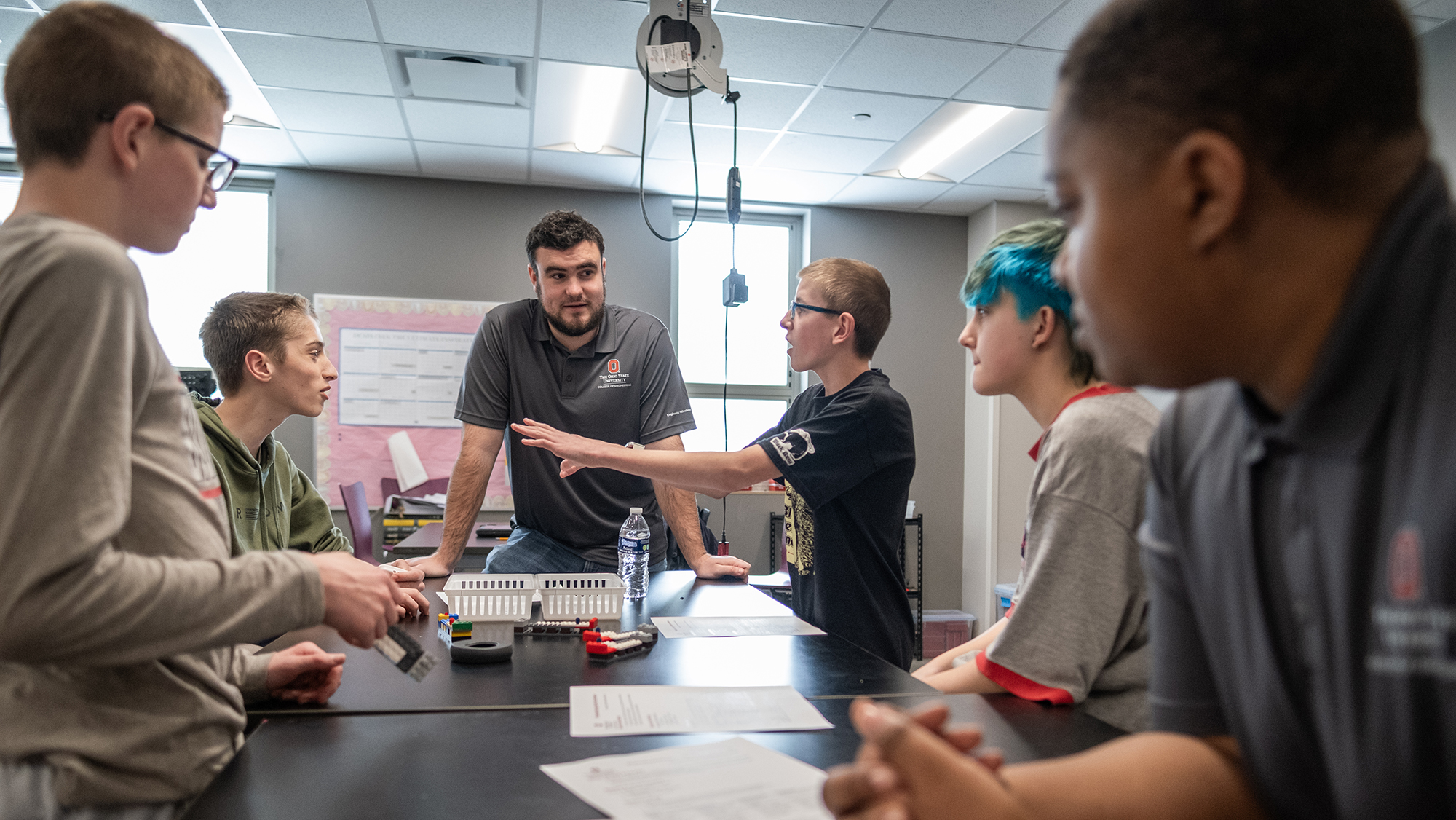
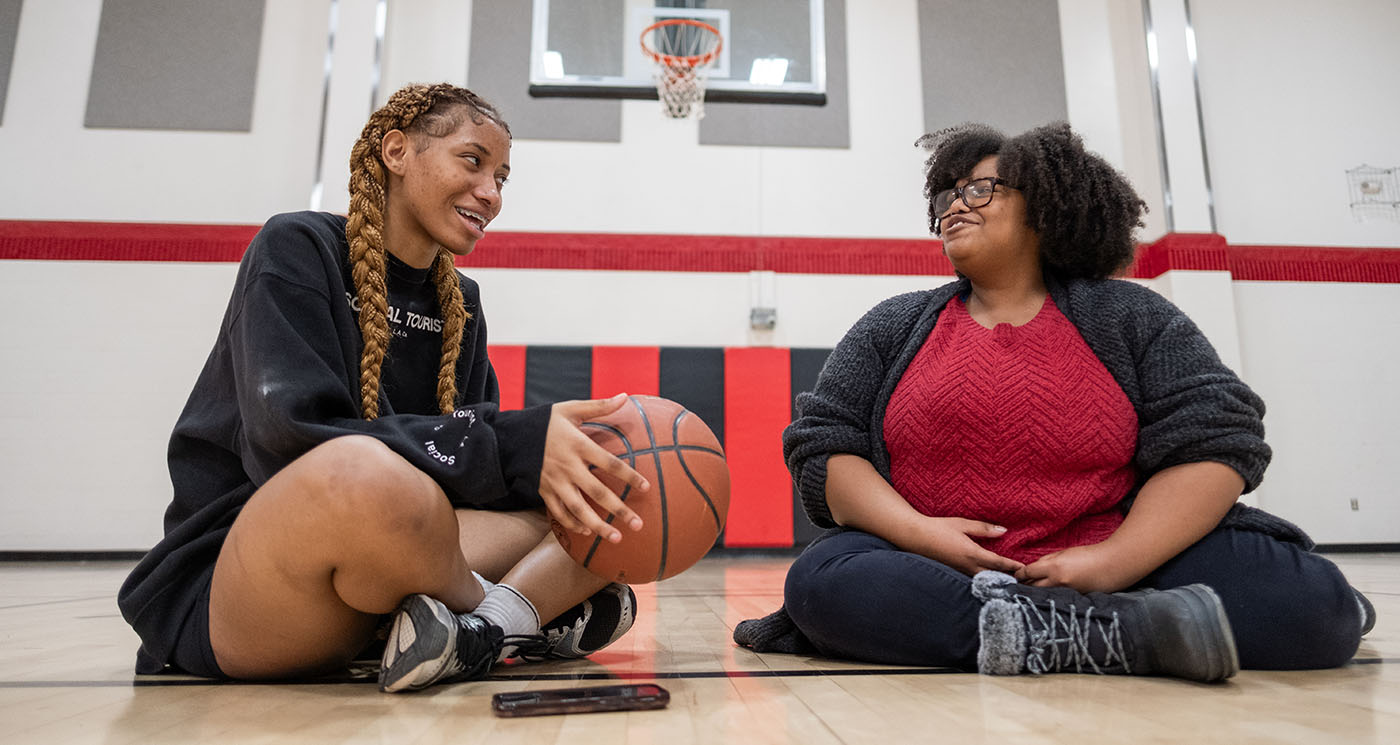
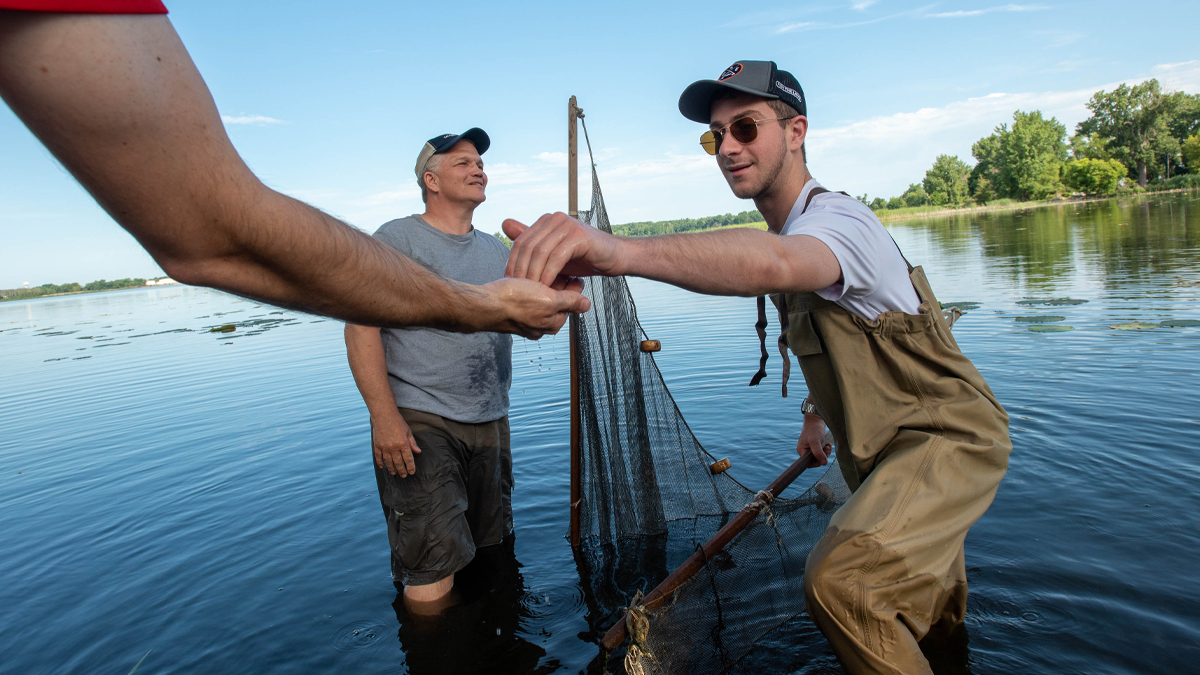
At the annual Denman Forum, Ohio State's best undergraduate researchers show off months of work.
To view flash video, this browser needs the Flash 8 (or higher) plug-in
Transcript
Allison Snow: This is our biggest Denman event ever, with more than four hundred students and we're really excited to be in this new facility, RPAC. What we really like about it, is that it's central to the campus and students are walking by seeing the Denman Forum getting a sense that there is a lot going on, on campus that they've never even seen before. For those that are in the forum, its just a nicer, newer facility that we've ever had. What I love about this forum is that the students have been working very hard and this is kind of the culmination for them of all that hard work and you can tell from their excitement that they've really accomplished a lot, they really have ownership of their projects, they're really excited about what their doing.
Jessica Hanzlik: Both my mother and my grandmother have science backgrounds, and so women in science has always been a particularly, an issue particularly close to my heart, and through poking around with statistics, I discovered that more women in France become scientists than in the U.S., so I wanted to discover why this is the case. So the College of Arts and Sciences gave me a scholarship which I used to go to France over spring break and interview female scientists and figure out where these differences are.
(Actors): "But once we leave this perfect little world all people see is a white guy and a black girl all hugged up."
Jennifer Harris: It's Because Your White is just a play about an interracial couple who are of college age, and it deals with the insecurities that they have and the insecurities that society may still have about the fact that they are a white guy and a black girl dating, and it just goes through their journey and their realization that if they're comfortable with being who they are with each other, as well as being apart from each other, then being together shouldn't be a problem.
Mark Talbot: This project is called Process Amnesia, I spent thirty days building one model per day, and by doing the process in such a rapid fire fashion, the objective was to tease out my own aesthetic sense abilities. At the end of the thirty days I did an analysis of the thirty models to determine certain trends in the aesthetic criteria in hopes for me to better understand my own way of working.
President E. Gordon Gee: I think it's reflective of the changing nature of the University. Our retention rate is 93 percent, among the highest in this country. Much of it has to do with this kind of focus on the quality of our undergraduate experience and that's what Mr. and Mrs. Denman have provided, an opportunity for students to do something unusual, at a very large institution.
Sandra Zurbrugg: So the big picture here is to make chocolate healthy. And we want to do that by putting galactooligosaccharides into our chocolate. We want to do that because the galactooligosaccharides will help improve good bacteria in your gut. Overall we were able to successfully put this GOS into the chocolate and along the way, we were also able to reduce the calories and reduce the fat by more than half.
Trent Kim: I took a look at two of the most popular health policy proposals, a conservative, and a liberal plan and the results are pretty striking. The liberal reform is generally redistributably equitable. That is each racial group gets about the same benefits. The conservative reform on the other hand, is a little bit more striking. Non-Hispanic whites actually account for almost 90 percent of the beneficiaries. These results are very meaningful and I think that public policy makers should keep these in mind as we move forward in 2008 with this next round of health policy reform.
Ken Dudek: I can't say enough about the Denman, its extraordinary that The Ohio State University has such an outstanding opportunity for their undergraduates to do this kind of research.
Andrew Dahlem: One of the key success criteria for our scientists is not just that they know how to compete and are excellent in their field of study, but also that they know how to work together across scientific disciplines in a collaborative fashion. Researchers from The Ohio State University are people who have learned how to do that and that's one of the principle reasons that we are very excited when they are looking for opportunities in our company.
Look around the room at the Denman Forum and you might see some of the people who will change the world.
Undergraduate researchers who showed their work at the Forum studied some of society's most pressing topics. One student found a gene that may cause brain cancer. Others studied childhood diabetes, depression, the treatment of sex offenders, gender discrepancy in science, and film's effects on teen smoking.
The Forum, now in its 13th year, is a joint venture between Ohio State's Honors & Scholars Center, Undergraduate Research Office, and Office of Research.
"This is our biggest Denman event ever, with more than 400 students," says Allison Snow, director of the Undergraduate Research Office.
The research isn't limited to science. Among the fields studied were architecture, art, communication, dance, education, and theatre. One group of students even studied how computer users express politeness, humor, and emotions while instant messaging.
"Here at Ohio State, all of the faculty are doing research that gets published, that gets noticed around the world, so the students can get involved in that--if they’re in history, if they’re in linguistics, if they’re in engineering," Snow says.
Each project at the Denman is evaluated by three judges; some are corporate judges whose companies look to hire Ohio State students. (See the list of Denman winners.)
"I can't say enough about the Denman," says Ken Dudek, a General Motors technical fellow who judged students' work at the forum. "It's extraordinary that The Ohio State University has such an outstanding opportunity for their undergraduates to do this kind of research."