The road to more age-friendly Ohio communities
Marysville shuttle provides service, community for older residents
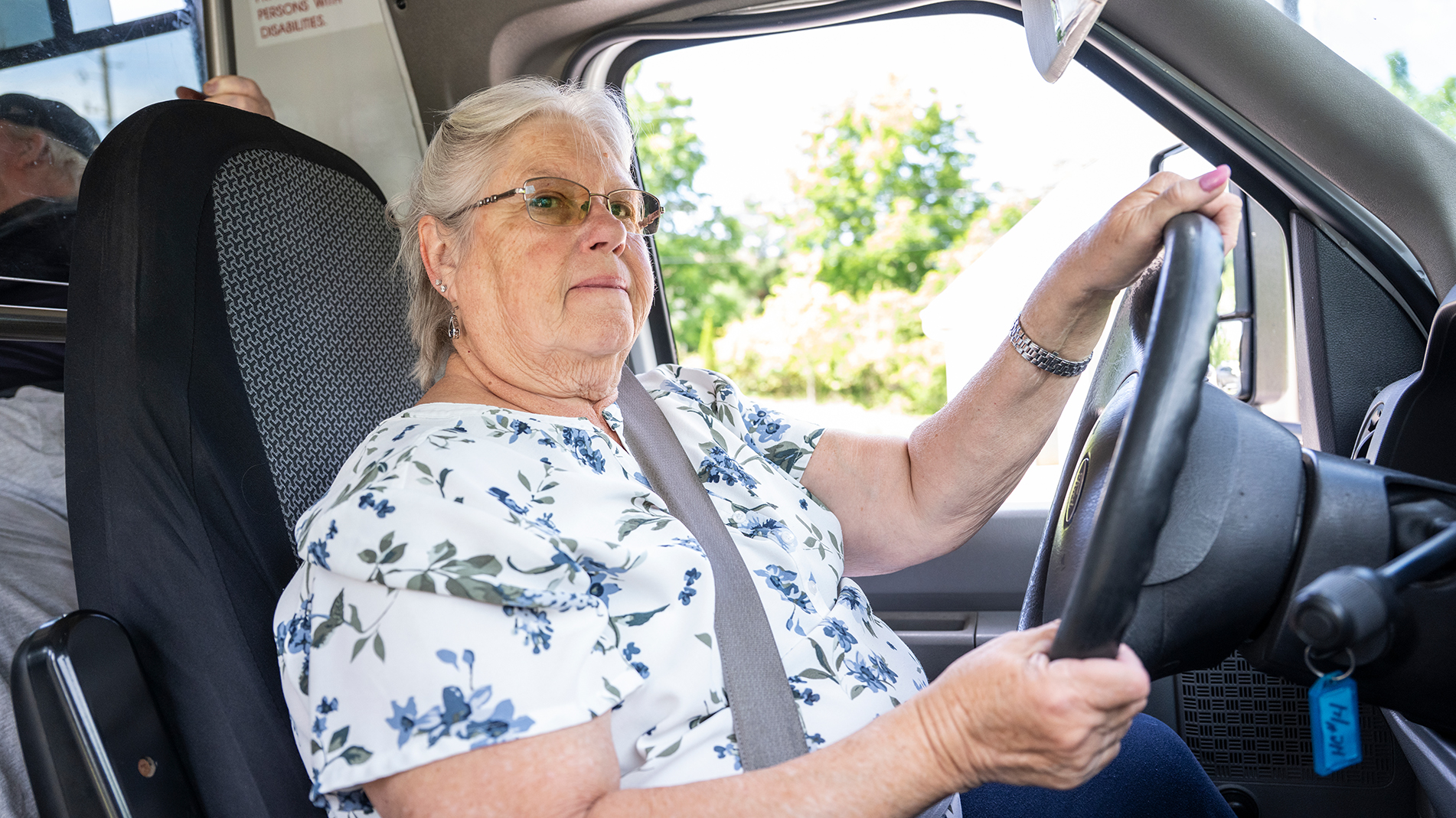
Anna Inman spent most of her days the past three decades behind the wheel of a bright yellow bus, shepherding children to and from schools in Marysville and nearby Fairbanks. Now retired, Inman has a part-time job that again puts her in the driver’s seat. But some things have changed. The bus is a little smaller, and the passengers? They’re a bit older.
Inman drives the “Marysville Mary-Go-Round,” as it’s known in town. The free bus runs twice per week, picking up older adults at two different affordable housing complexes and shuttling them around Marysville. Frequent stops include the bank and post office, stores like Kroger and Walmart, and the Union County senior center. Other stops are made as needed, or as the calendar dictates; the shuttle ran to the polls on election day, for example.
“This fulfills so many different needs,” says Inman. Passengers “can get things done. They can pick up their prescriptions. They don't have to wait for their family or friends, and they don't have to beg [for] a ride.”
The project started with involvement from Ohio State’s Age-Friendly Innovation Center, a program of the College of Social Work that works to improve communities for older adults through research, education and engagement. Initial funding came from a Honda Corporation grant to the center, which then worked with local Union County organizations Neighbor to Neighbor and Bridges Community Action. The buses belong to A Way Out, a company that provides employment and transportation services. With community input, those involved zeroed in on a route that would make the most sense for riders.
While mobility for older adults is hardly a new issue, the Age-Friendly Innovation Center has made it a major focus in recent years. The center was involved in a study earlier this decade that looked at the needs of central Ohio’s older residents and which tasks proved difficult for them. Researchers had participants log their whole day and keep track of activities they wanted to do but couldn’t because of lack of transportation. It confirmed what they already suspected — that there was a widespread, unmet need for more transportation options. That need continues to grow along with the number of older Americans. The U.S. population of people 65 and older increased by 28% between 2015 and 2024. Ohio is estimated to have more than 2.3 million people in that age range by 2030.
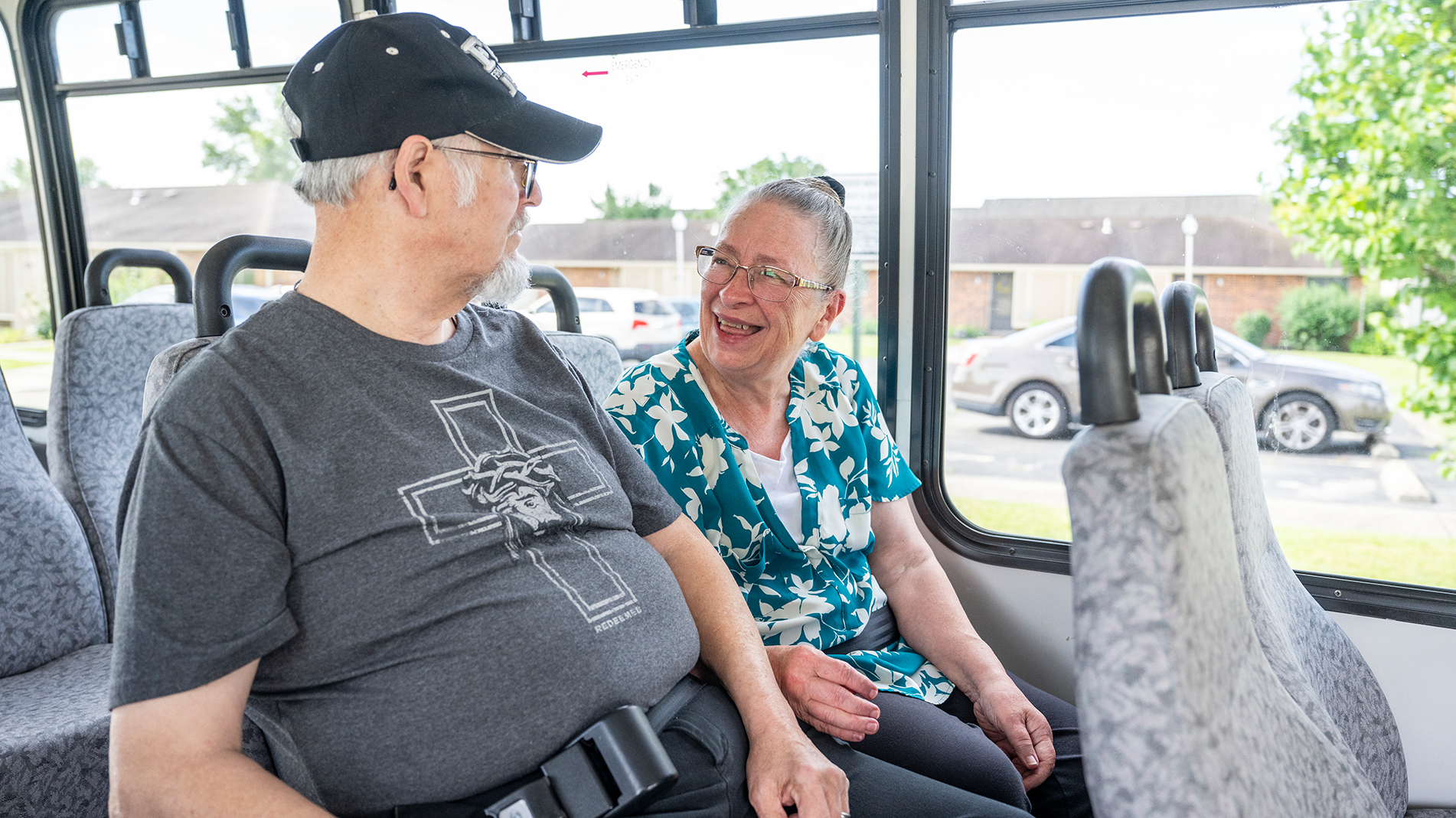
Most older adults still drive, but the question of when to call it quits is a familiar and high-stakes one for millions of people, whether for themselves or for their aging relatives. Americans outlive their ability to drive by seven to 10 years on average, says Holly Dabelko-Schoeny, an Ohio State professor of Social Work and director of research for the Age-Friendly Innovation Center. The isolation that sometimes results can have negative effects on overall health.
“The most significant predictor of length and quality of life are social connections,” said Dabelko-Schoeny. “It’s a stronger predictor than diet or exercise.”
It’s not just about physical health; she says there’s also tremendous value in helping older adults reclaim a sense of independence they may have lost along with their ability to drive.
People often don’t understand how lack of transportation can make some tasks that are seen as routine for younger people much more difficult for some older people. “Ageism is alive and well, and we have a long way to go to ensure our communities are accessible to older people,” said Dabelko-Schoeny.
The program has made a big difference in the lives of passengers, those involved say. Riders are happy to rely less on their family members. For some, it means resuming regular errands that had become nearly impossible. One rider was able to get her first professional haircut in several years.
The value is clear to the 67-year-old Inman. “I’m also a senior citizen,” she says, just like her husband and her 91-year-old mother who lives with them. “I enjoy my independence. I enjoy being able to get out and do things for myself, take care of other people, and when you can get out, you can take care of yourself and other people better.”
Beyond the benefits to individual riders, something special has happened with the Marysville Mary-Go-Round. What began as a practical service for older adults has evolved into a community of its own, Inman said. Frequent riders have become fast friends, meeting up for dinners and getting together on New Year’s Eve. Sometimes, passengers join just to catch up, even when they have no errands to run.
“These are my friends, and I just love taking them places, hearing about their families, hearing about their grandkids, just like I tell them about my grandkids,” Inman said. “It's a whole community, and it includes me.”
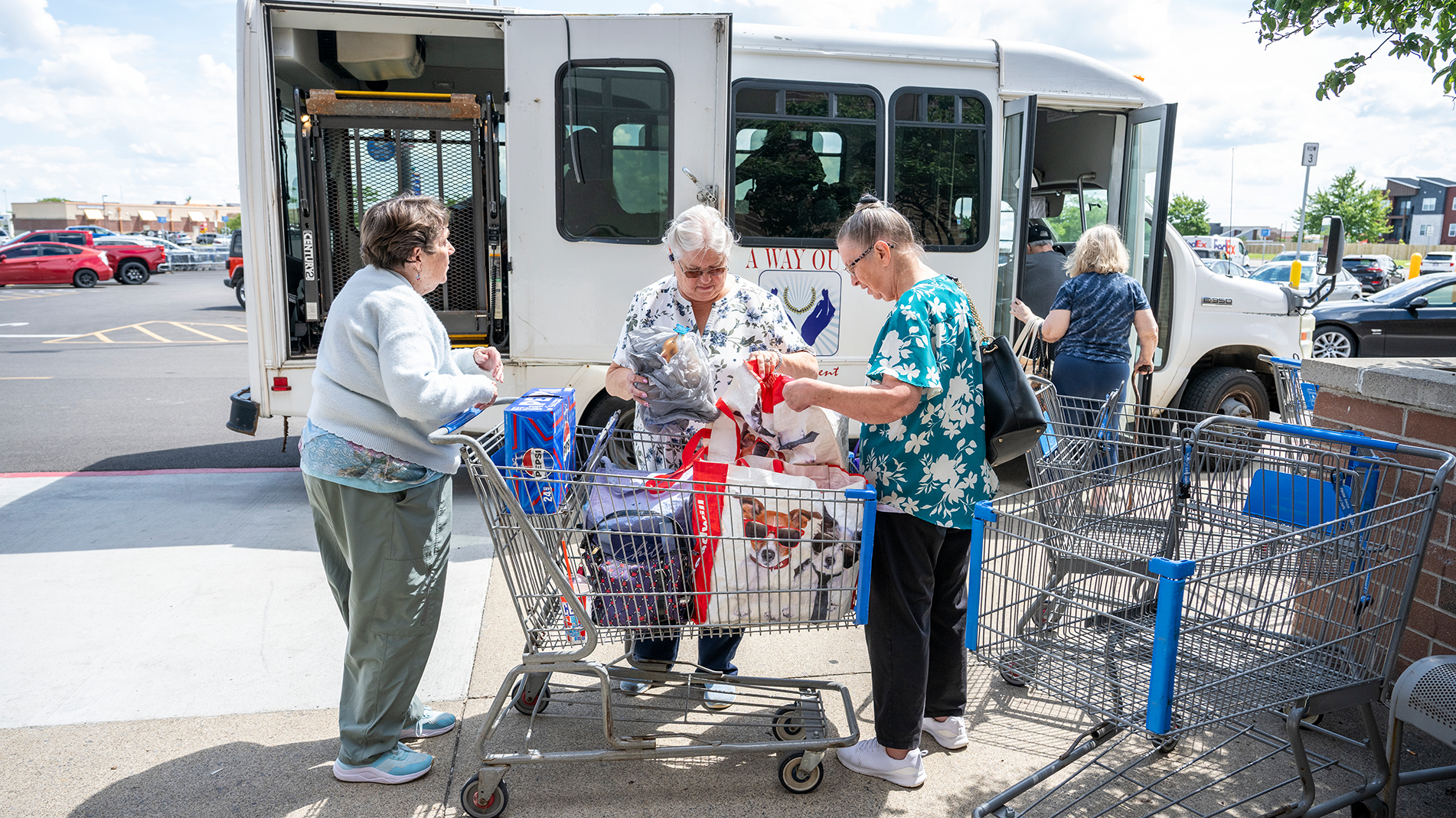
Similar programs are running in Reynoldsburg, in Bellefontaine and around Indian Lake. A version was also piloted in Columbus’ Clintonville neighborhood. Marisa Sheldon, the Age-Friendly Innovation Center’s director, hopes it’s just the beginning.
“Our philosophy is to make communities more Age-Friendly. What makes a community more livable for older adults makes it more livable for everyone,” said Sheldon.
Working with partners including municipal governments, community non-profits and residents, the Age-Friendly Innovation Center’s activities include: emergency preparedness workshops for older adults, research studies to better understand the needs of the aging community, and meetings with local officials to advocate for older adults. In the past decade, the center estimates it has engaged with more than 7,000 older adults.
They’re trying to reshape the broader conversation around aging, too. The center makes buttons with a simple, punchy message: “Aging: So Cool Everybody Is Doing It!”