Helping first responders heal hidden brain injuries
Officers have high rates of concussions but little head injury support. Ohio State is helping change that.
Josh Walters never saw the car that slammed into him. But the aftermath brought home the true importance of his work with Ohio State.
Driving to an early morning SWAT raid in November 2024, a driver ran a red light and plowed into the Franklin County Sheriff’s Deputy. Disoriented, the 15-year veteran assumed the warm liquid soaking his uniform was blood.
It was coffee. Luckily, he had no broken bones, no visible injuries. Beneath the surface, though, Walters had suffered a concussion. He just didn’t know it yet.
After an ER visit — with no concussion check — he called someone he trusted, Ohio State’s Jaclyn Caccese, a head-injury expert he’d been working with on an issue that receives little attention anywhere: concussions in law enforcement and first responders.
Caccese, an associate professor in the School of Health and Rehabilitation Sciences and a lead investigator in Ohio State’s Chronic Brain Injury Program, immediately connected him with neurologist Dr. Andrew Sas. Walters was diagnosed and began rehab with an Ohio State athletic trainer.
His recovery was successful and, in law enforcement, almost unheard of for its thoroughness.
“Your average officer has no idea what a concussion clinic is, let alone how to contact one,” Walters said. “It’s crazy, but youth athletes have more concussion care than we do. This job isn’t built for brain health.”
Car crashes, blast exposures, altercations, falls — officers face constant risk of head injuries. Yet when they happen, they often go unrecognized.
Concussions carry long-term risks, with links to mental health struggles. The short-term consequences can be frightening. An impaired officer might forget details in a police report — a court document — or drive while cognitively slowed. Vision, balance and reflexes can all slip without warning.
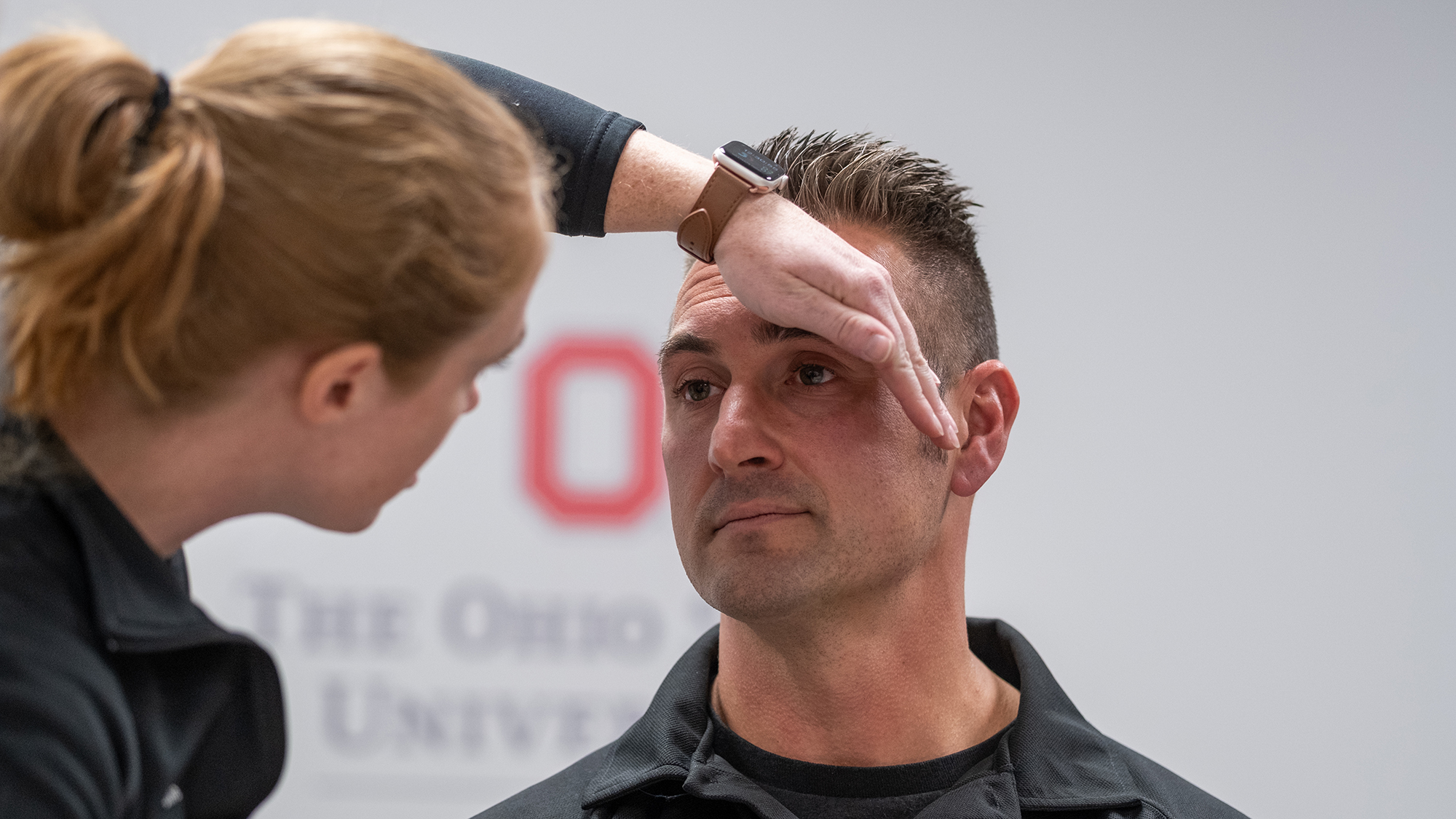
After his crash, Walters noticed his aim was off at the gun range. “My eyes weren’t tracking right,” he said, something Dr. Sas confirmed during his exam.
“In the world we live in, it’s unacceptable for me to be back on the street even slightly impaired,” Walters said. “If my reflexes are slow, it can mean someone is going to the grave.”
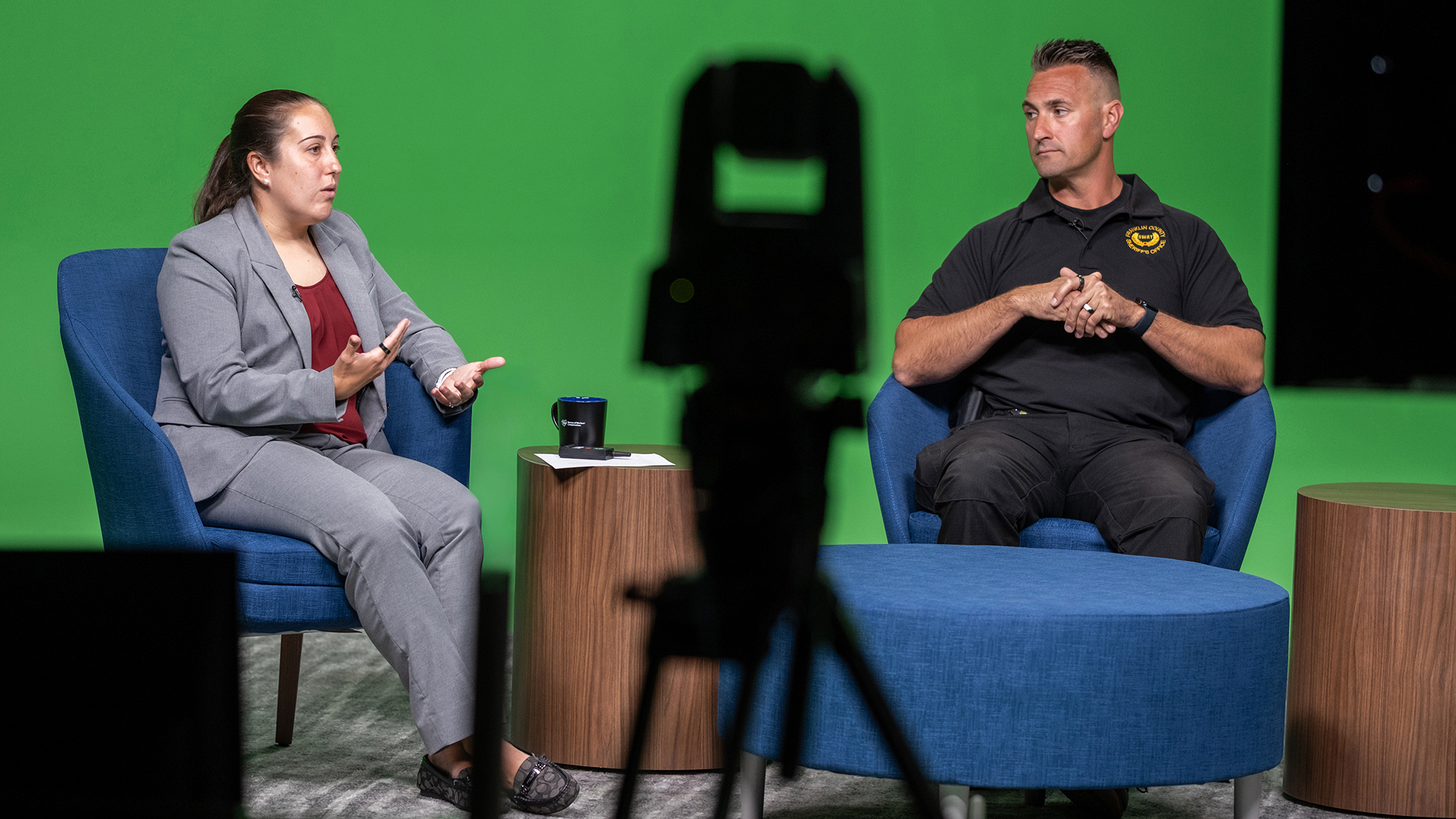
Through a peer support group he leads, Walters teamed with Caccese to bring concussion awareness and care to law enforcement. It’s a movement they’ve started in central Ohio that could ripple nationwide.
“We’ve made a ton of progress in concussion management in many areas, but first responders are a group that’s been largely overlooked,” said Caccese, whose research had previously focused on athletes. “This work has been eye-opening for me and the impact we’re seeing is tremendous.
“It affects not only the lives of officers and their families but the communities they protect. Officers need to make critical decisions quickly. Concussions can affect the way people think and react.”
Together, Caccese and Walters have raised awareness, improved prevention and developed treatment protocols.
“We're hoping our model can spread because we want officers to be happy, healthy and safe throughout their lifetimes.”
Their first step was finding out how bad the problem was, and it was staggering.
In a first-of-its-kind survey of Ohio law enforcement, 74 percent of officers reported a lifetime history of at least one head injury and 30 percent said they’d suffered a concussion on duty. In a recent follow-up assessment, Caccese found that 70 percent of those concussions went unrecognized, undiagnosed or untreated.
Since then, the Franklin County Sheriff’s Office has become a pilot site for reform. To help prevent head injuries during cadet training, they now use mouthpieces with sensors to measure impacts and space out defensive combat training days for recovery.
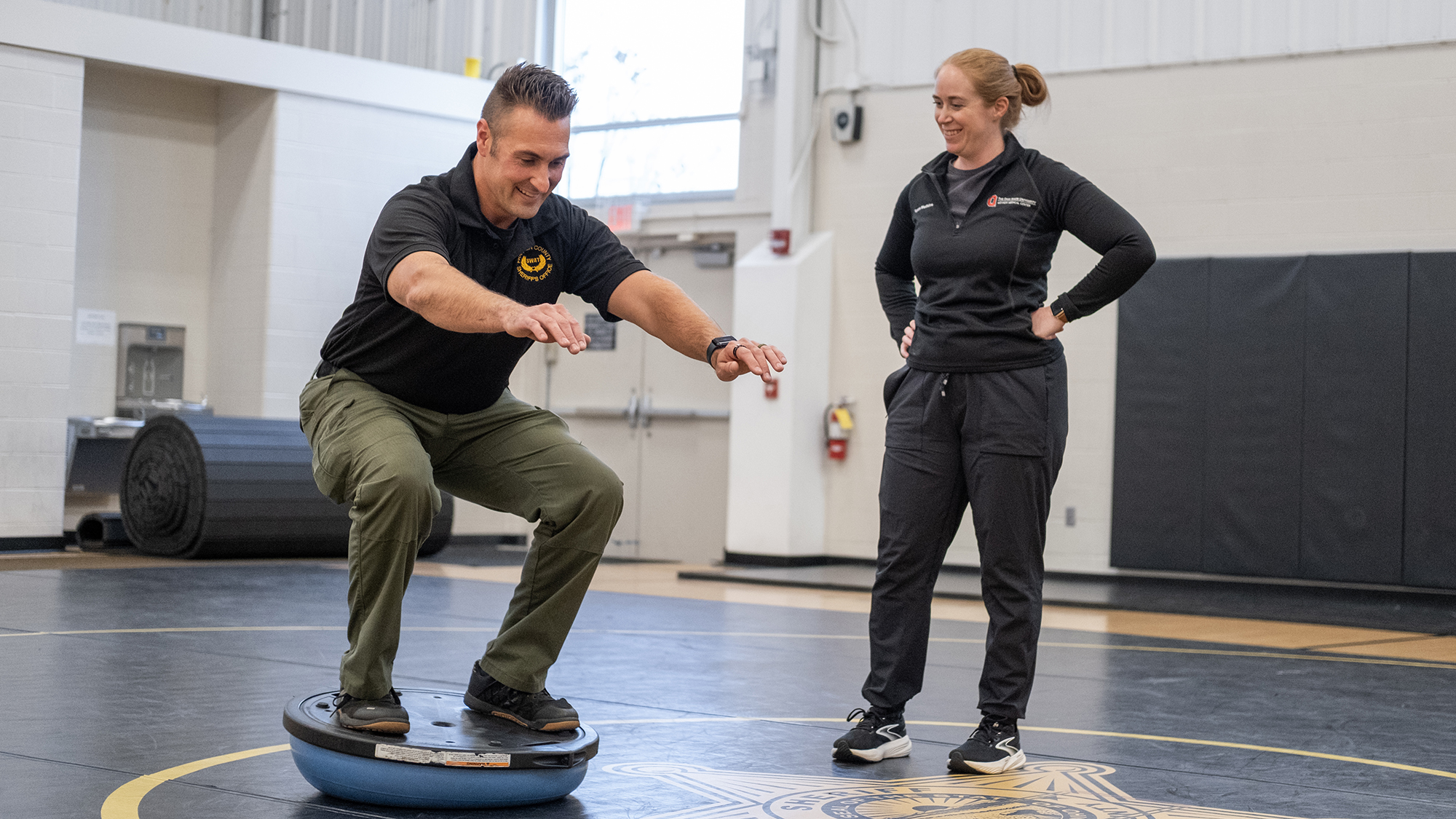
For those on duty, Ohio State athletic trainers are available to assess and rehabilitate officers. If an injury occurs, officers are immediately referred to specialists like Dr. Sas.
For Deputy Ryan Stimpfle, those changes came just in time.
In 2019, he suffered a concussion in a car crash and was brushed off by doctors.
“It was a miserable experience,” he said. “The doctor just kind of blew me off, so I went back to work. That’s always been the attitude, slap a Band-Aid on it and get back in.”
Then, in December 2024, a drunk driver plowed into his parked cruiser. Another concussion, only this time, the new protocols worked.
“It was a great experience,” Stimpfle said. “Jaclyn and Dr. Sas checked in every day, and when I got back, I was 100 percent ready. We’re finally on the right path.”
Outside Franklin County, there’s still little support for first responders. So Walters and Caccese are spreading the message through new studies, protocol advocacy and speaking engagements. Also, this spring Ohio State will host an international concussion conference for first responders.
“We’re hoping our model can spread because we want officers to be healthy, happy and safe throughout their lifetimes,” Caccese said.
She notes that every state already requires athletes to be cleared by a medical provider before returning to play after a concussion. “The model’s already there, it just doesn’t apply to our law-enforcement officers who may sustain a concussion in the line of duty.”
Next, Walters and Caccese want to introduce baseline testing for all officers, similar to what Ohio State athletes undergo to personalize diagnosis.
For Walters, the mission is deeply personal.
“The people we’ve worked with at Ohio State are the most compassionate, driven people I’ve ever met. They could work with elite athletes and they choose to work with us. They’re dedicating their life’s work to making me healthier, helping me live longer, making me a better cop for my community.”
It’s been a humbling experience, Walters said, but one he cherishes.
“If I can help tomorrow’s cop be a better cop, that’s success,” said Walters, a 2010 Ohio State graduate. “That’s what matters to me.”