Helping families create lasting stability
Development of Living Skills program helps parents build skills that can strengthen generations
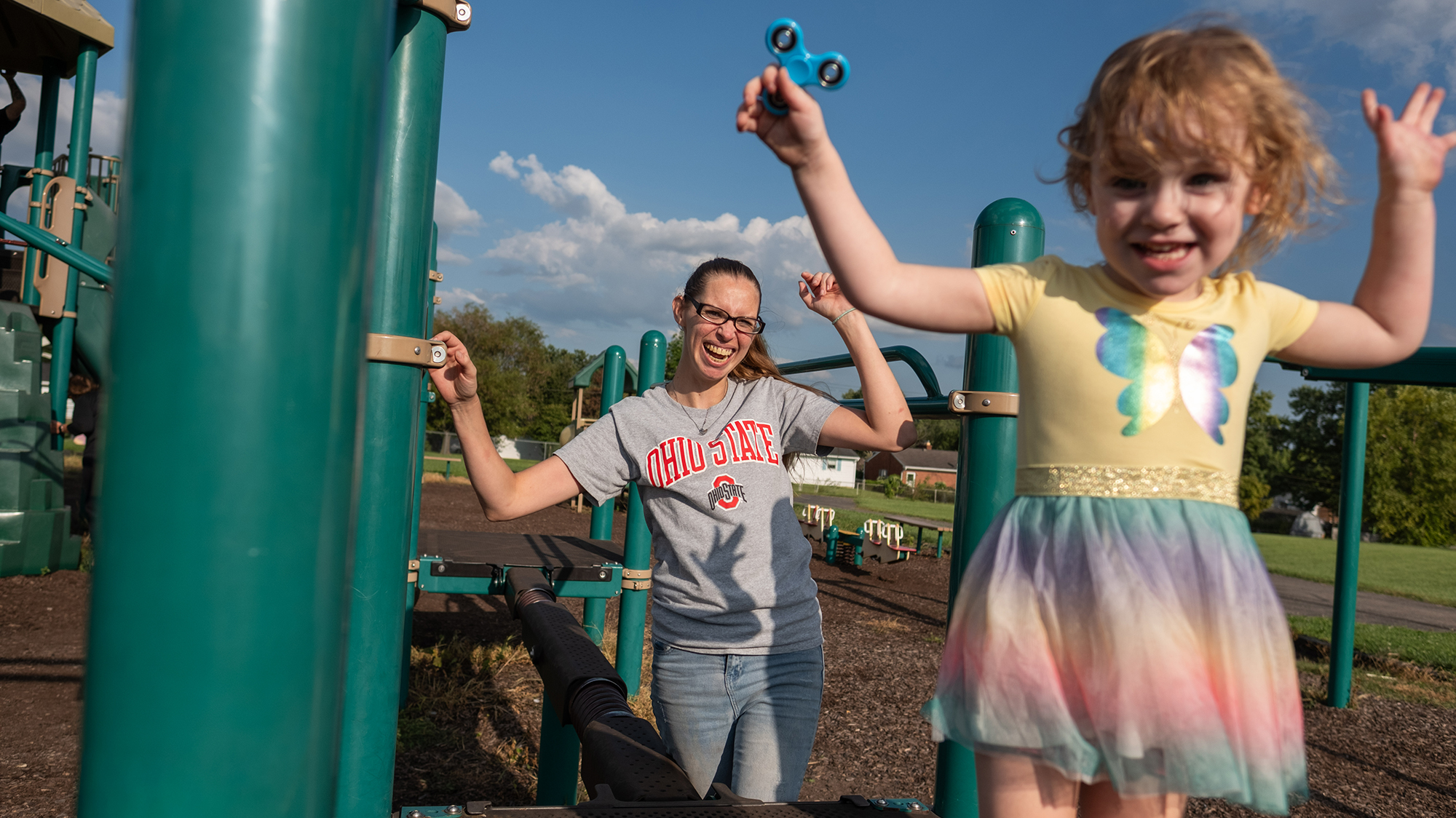
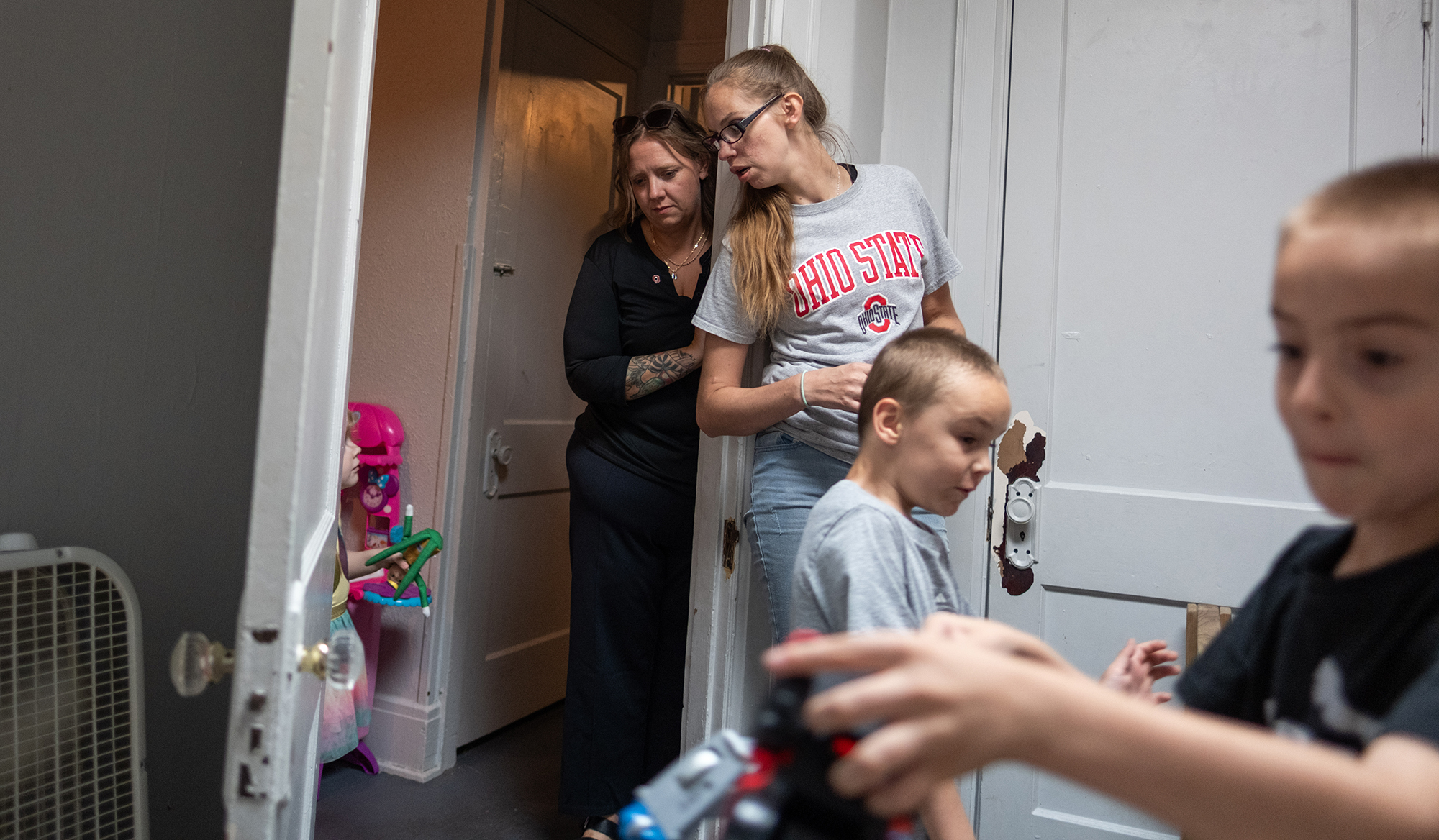
Liz Helton stands in her Butler County kitchen while her three youngest children race around her in the easy rhythm of a family that finally feels settled. Seven‑year‑old Alex asks what chores he can help with; 5‑year‑old Carter zooms through the living room, laughing at his own joke about having a “fourache” (a headache in his forehead); and 3‑year‑old Sabrina trails behind them, eager to carry her cup to the sink all by herself.
It’s ordinary, noisy, joyful, and for Helton, it’s everything.
“I never thought I would accomplish this,” she said. “A home, a job, my kids with me — I’m grateful every day.”
For years, that scene felt impossible. Helton’s path to stability was long, painful and marked by moments no one should have to endure. But with determination, support from Butler County Children Services, and the hands‑on guidance of The Ohio State University Extension’s Development of Living Skills (DLS) program, she rebuilt her life — and her family.
‘I lost all my ways’
Helton is a mother of four. Her oldest daughter lives with her father and her three youngest — Alex, Carter and Sabrina — are now home with her, thriving. But getting here took years of work.
“I’ve been in and out of children’s services since 2019,” she said. “I completed the services with OSU twice. It took this long to get them fully back.”
Before that, Helton lived through years of instability and abuse. She was introduced to substances by a former partner. She was unhoused, living in a tent, and isolated from her family. She endured physical, emotional and mental harm. At one point, she was locked in a basement. At another, she lost custody of her newborn at the hospital.
“I wasn’t living my own life,” she said. “I lost all my ways.”
The turning point came when she found out she was pregnant with Sabrina and realized she had to choose her safety and her children’s future. “That’s when I made the decision that it’s time to go,” she said.
She checked herself into a recovery program and moved into transitional housing to begin rebuilding her life from the ground up. That’s when Ohio State, referred by Butler County Children Services, stepped in to help.
A program that meets families where they are
The Development of Living Skills program, run by Ohio State Extension in Butler County, is a 35‑year‑old in‑home educational intervention designed for families at risk of child abuse or neglect. It teaches daily living skills such as parenting, budgeting, cleaning, organization and communication, and helps families meet the expectations of Children Services.
“We’re one of the only programs that goes into homes,” said Genesis Horstman, program coordinator and instructor. “We eliminate transportation barriers, we observe parenting directly, and we stay with families even after their case closes.”
Horstman has worked with hundreds of parents, but Helton stands out.
“She’s full of light,” Horstman said. “Liz works harder than almost anyone I’ve ever had. She wanted to learn, she wanted to be a good mom, [and] she completed the program twice because she asked for more support.”
Helton remembers that turning point clearly.
“I’ve never been a real parent,” she said. “I didn’t know what to do. I wanted to do whatever it took to be the parent I wasn’t in the beginning.”
With Horstman’s help, Helton learned how to care for a newborn, how to parent children with ADHD, how to manage routines and household tasks, how to build structure and confidence, and how to ask questions without fear.
“Genesis gave me the confidence that I can ask and not be afraid,” Helton said.
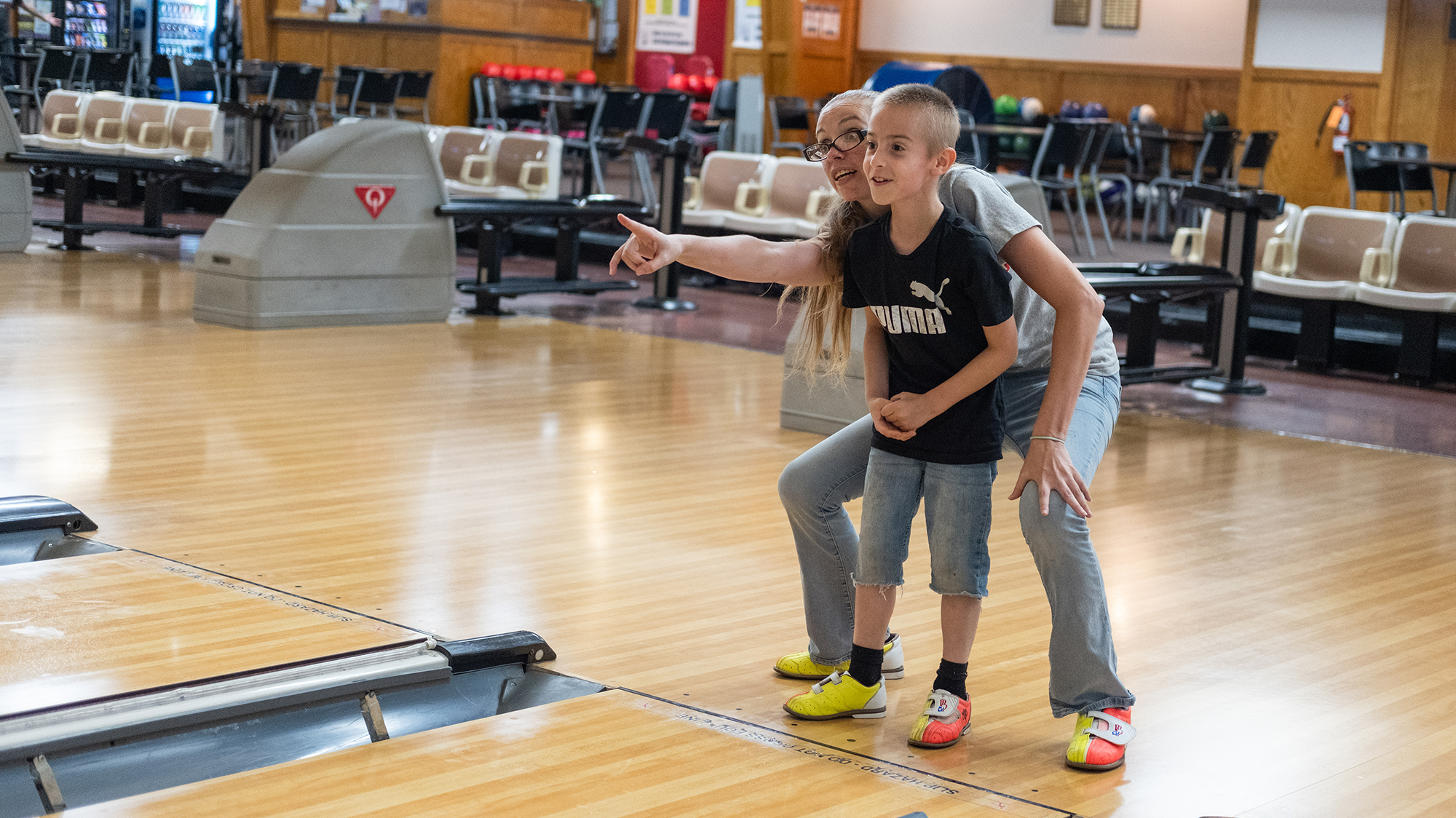
Last year, Helton regained full custody of her boys. Sabrina, who has been with her since birth, went through the entire program alongside her. Today, the kids are thriving — and helping around their home in Middletown, Ohio.
“They clean their rooms, they ask to be excused from the dinner table, they put their dishes in the sink,” Helton said. “Alex asks what chores he can do the moment he walks in the door.”
Even small moments feel monumental. “When I come home, they’re my peace,” she said. “Every day they make me happy.”
And Horstman sees the transformation clearly.
“It’s her hard work and perseverance,” she said. “She didn’t give up on her kids. That wasn’t an option.”
Breaking cycles, building futures
The DLS program serves about 150 adults each year, with many more children impacted. It began through a county levy in 1985 and is now funded by the Temporary Assistance for Needy Families program. In 2024, it earned a national Human Development/Family Relationships Award from the National Extension Association of Family & Consumer Sciences.
In Butler County, Extension professionals like Horstman step into living rooms, kitchens and front porches every day, not to check boxes, but to help parents build skills, confidence and stability needed to keep their families together. For nearly four decades, the Development of Living Skills Program has been one of the county’s most trusted in‑home educational supports for families at risk of child abuse or neglect. Every referral to DLS comes directly from Butler County Children Services, often during moments of crisis or transition. Some parents are working to prevent removal of their children while others are working toward reunification. Many are navigating poverty, food insecurity, transportation barriers, legal challenges or unstable housing.
“The impact is generational because education opens up so many doors,” Horstman said. “If someone learns something they were never taught, and they teach it to someone else — now we have a chain of learning. Maybe we can make real change.”
Helton believes that’s exactly what happened to her.
“I’m still recovering, but I’m grateful to see everything around me,” she said. “I got to live to share a story.”
Her message to other parents who feel overwhelmed or afraid: “If you’re willing to try, do it,” she said. “Take the help. It’s worth it.”