Generation Rx: Building safer communities through knowledge
When Betsy Coble moved from Illinois to Wood County’s Perrysburg seven years ago, she didn’t expect to become the unofficial guardian of medication safety for her apartment community. She arrived with few belongings, intending only to help her sister after a family loss. But in the tight-knit senior housing complex where she settled, Betsy quickly became something more: a connector, a helper, and eventually a quiet leader of Ohio State’s Generation Rx program.
“I’m one of the younger ones here,” she jokes. “But I grew up with the older generations. My mom had friends who were all older than her, so I have fun here.”
That comfort and her willingness to step up were exactly what made her the perfect partner for Susan Zies, assistant professor and Ohio State University Extension educator in Wood County. When Zies brought the Generation Rx program to the apartment complex, she needed someone who could gather residents, encourage participation and help the lessons stick.
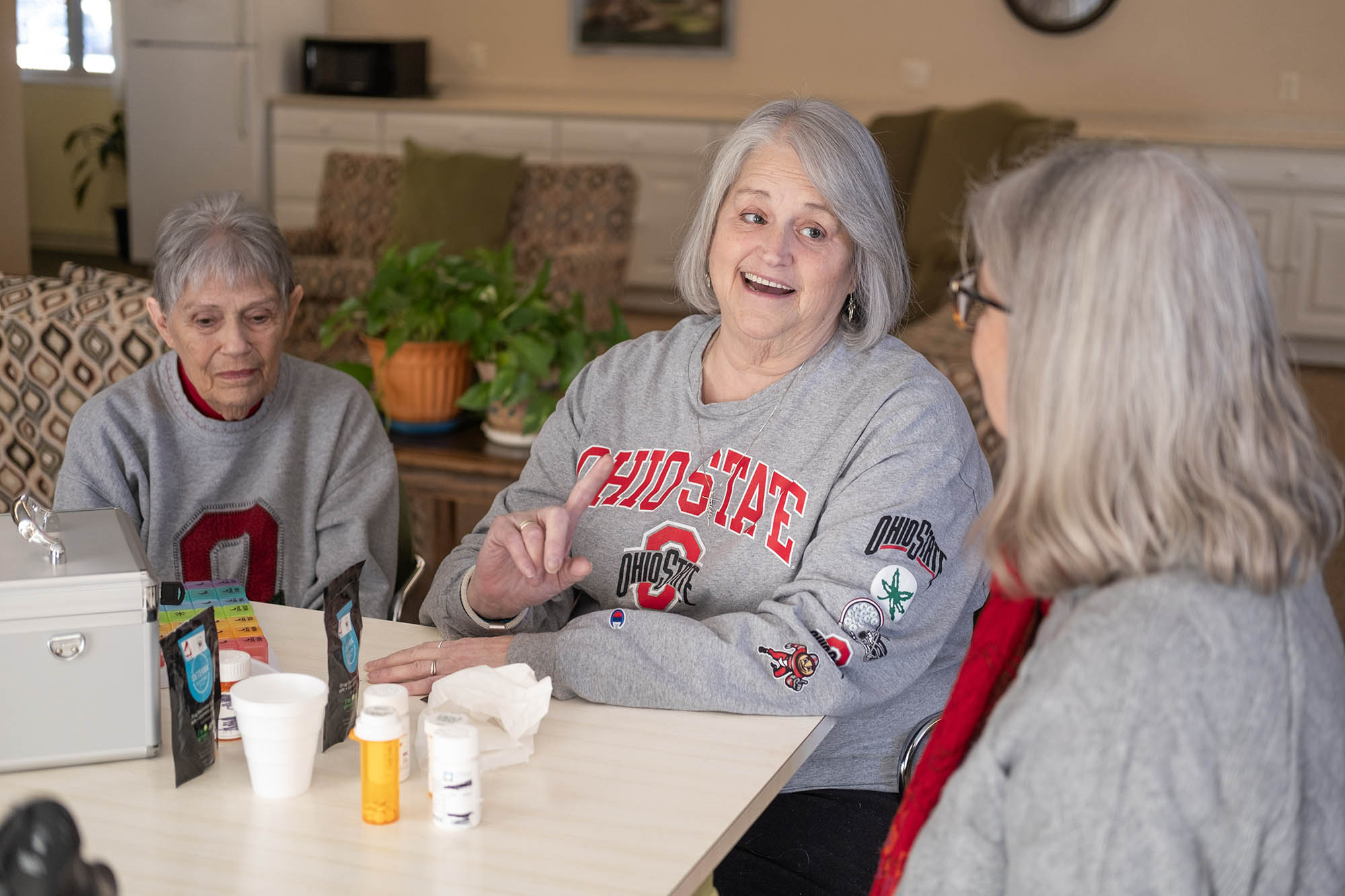
Coble didn’t hesitate. “Anytime Susan needs older people, she comes to me,” she laughed. “And if you say there’s going to be pizza, people show up.” More than 25 residents attended that first training, which is nearly a quarter of her building’s residents.
For older adults, Zies says the goals are simple but urgent: “Learn to safely dispose of their medications, be their own advocate, lock up medications, store them safely, and establish a relationship with a pharmacist.”
Generation Rx began at Ohio State’s College of Pharmacy in 2007, created to address what faculty saw as “the rise in prescription opioid deaths,” said Kelsey Schmuhl, clinical assistant professor and director of Generation Rx at the university.
When the program started, Ohio was in the grips of a prescription opioid problem. “We were seeing more opioids in our communities being prescribed, and we really had a crisis where people were dying from overdoses from prescription opioids and the misuse of other prescription medications,” she said. “Now, a lot has changed since 2007. What we’re seeing now is more illicit drugs, and we’re really in a phase where we’re seeing a lot of counterfeit medications in our system, and substances that are mixed together that can cause even more potent effects.”
Over nearly two decades, Generation Rx has grown into a statewide and national effort. “We have developed over 70 free resources that teach people of all ages how to use medications and other substances safely,” Schmuhl said.
Generation Rx messaging is built around several core safety principles: taking medication as prescribed, which means taking it how the prescriber intended it and for the reason your prescriber intended it; not sharing or giving anybody else your medication; not taking medications from somebody else; storing medications appropriately; and disposing of medications appropriately. “And our last key message is really about being a role model for others in your community,” Schmuhl said.
The program was featured in Ohio State’s self-study for the 2026 Carnegie Community Engagement (CE ) Classification, an elective designation awarded by the American Council on Education (ACE) and the Carnegie Foundation for the Advancement of Teaching, that highlights the institution’s commitment to community engagement. Ohio State was one of 157 public institutions recognized in 2026 and is one of 277 institutions in the country to earn the designation. It was also a 2026 “Program of Excellence in Engaged Scholarship” through Ohio State.
Becoming a community connector
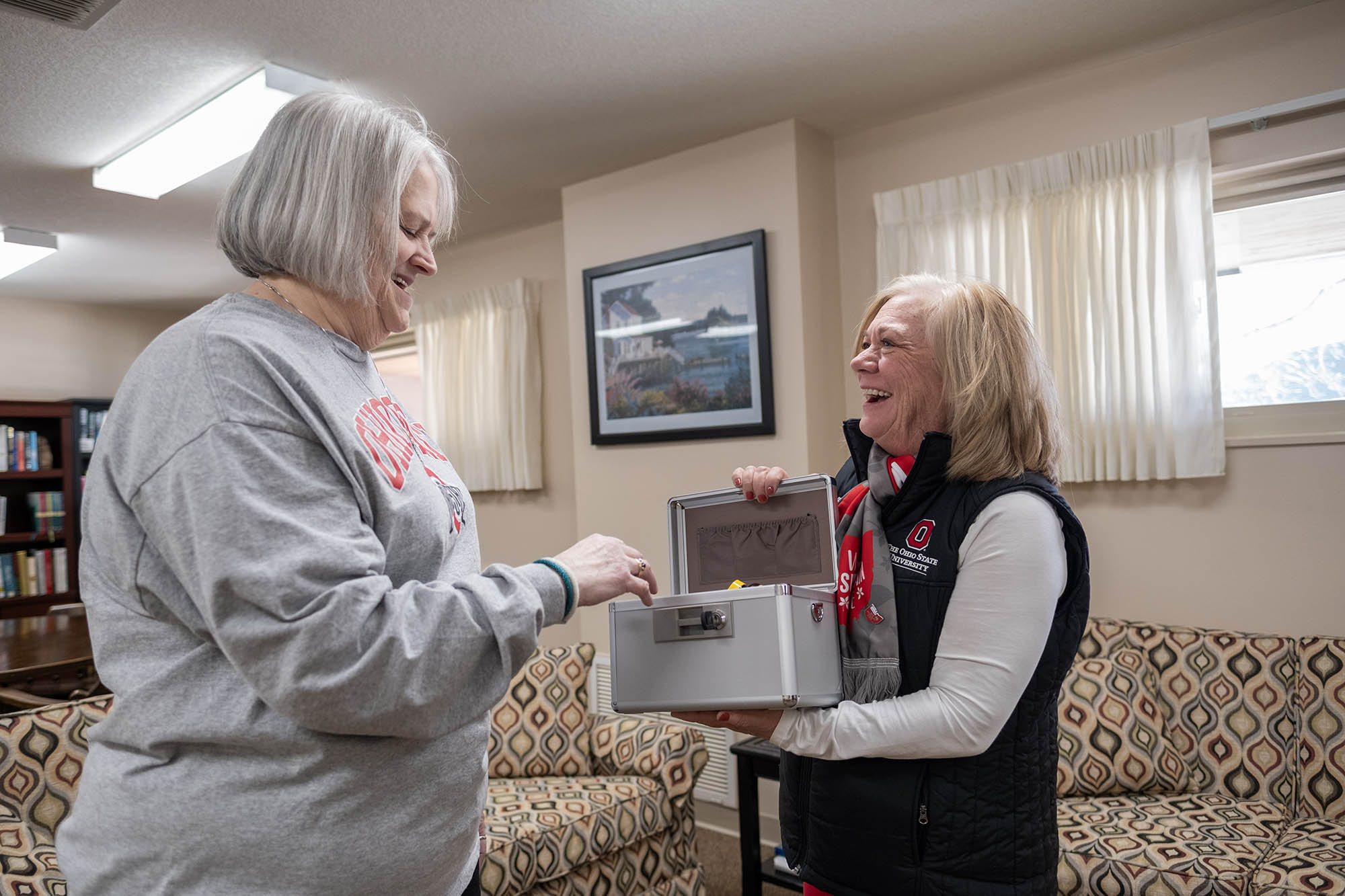
During that first session in Wood County for Coble and her neighbors, residents learned about safe disposal, including the medication‑neutralizing pouches Coble now calls “pill destroyers, which just makes sense for me, because that’s what they do. They destroy your pills.” She keeps extras in her closet, hands them out when neighbors need them and educates everyone to use them. She also distributes medication lockboxes. “Those were Christmas presents for a lot of people. … It just feels good knowing that you’re helping the future generations,” she said.
Ohio has long struggled with high overdose rates. The state and Maryland tied in 2024 for having the sixth-highest rate of pain-reliever misuse in the nation, with 3.57% of the population reporting abusing pain medication, according to the Department of Health and Human Services. There were 4,452 unintentional drug overdose deaths in 2023, a 9% decrease from the previous year, according to the Ohio Department of Health. Zies said she has seen the consequences firsthand. “Many times, when somebody becomes addicted to medications … they actually get it from a family member or a friend. That is the number one avenue for people to get drugs from, and unfortunately, that becomes an epidemic.”
Coble knows the risks, too, especially for older adults who grew up with different habits, like holding on to expired medications that can be dangerous to others. “People also just pitched everything or poured it down the toilet, and thought it’d be fine.” Now, she corrects neighbors who slip back into old routines, letting them know that can be harmful for the water supply. “I just have to remind them that we’re doing it for ourselves, for future generations, for the environment.”
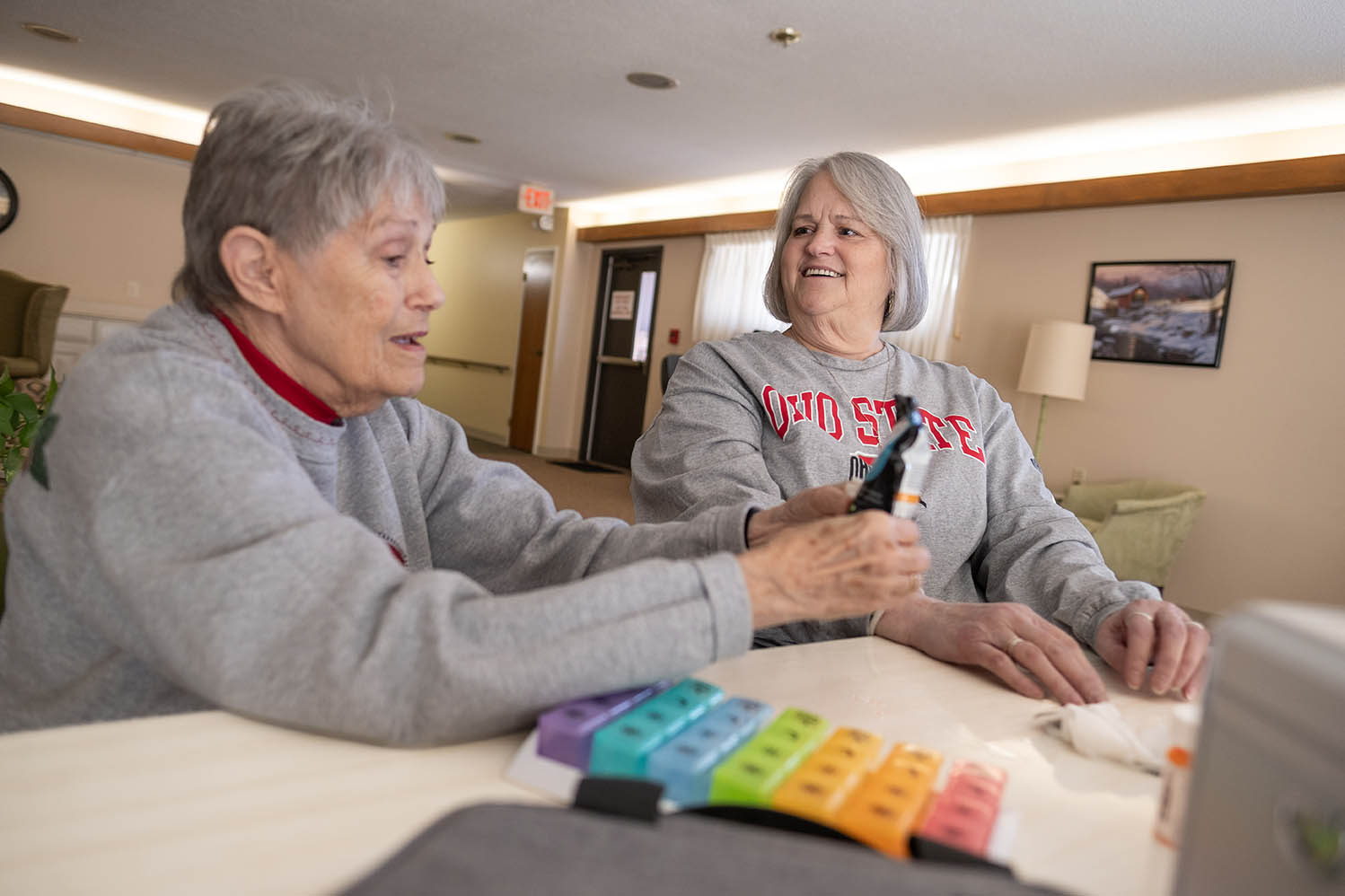
She’s also seen how easily medications can be mistaken for something harmless. “Some of them are just a blue circle, kind of like a Skittle or something and someone’s grandchild could come in and say, ‘Oh, this might be something good,’ and just grab it,” Coble said.
Zies calls Coble “a little unique [and] a community connector,” while Schmuhl calls people like her “the heart of the program.”
Coble doesn’t claim any special role, but her impact is unmistakable. She’s become the person residents trust.
“It's rewarding for me to work for Ohio State – to work in the community, and ultimately help serve my community and help my community be healthier,” she said.
Generation Rx was founded by two College of Pharmacy faculty members, Nicole Kwiek and Ken Hale, during what Schmuhl described as the “prescription opioid era” of the epidemic. From the beginning, the goal was prevention grounded in research and education rather than fear. They wanted to teach “safe medication practices, the consequences of misusing medications, and using the best strategies, not using scare tactics,” she said.
What began as a campus-based effort has grown into a national, partner-driven program.
“Now that we’ve grown, we are a national program and we’ve been utilized all over the country,” Schmuhl said. “We have an online training program for our facilitators called the Generation Rx Ambassadors Program [and] we’re really encouraging anybody who wants to go and deliver Generation Rx programming to take our online course so they can learn best practices in prevention.”
The free toolkits are designed for elementary-aged children, teenagers, university students, adults and older adults, and each one includes facilitator guides, activities and age-appropriate materials. The idea is simple: Anyone can teach it.
“You don’t have to be a health care professional. You don’t have to be an educator. Any community member can go out into their own town or city and provide this education really easily,” Schmuhl said.
“What Generation Rx strives to do, and what I strive to do leading Generation Rx, is to really always be ready for what’s next, and be ready to prepare Ohioans about the dangers of medications and other substances that we’re seeing right now in our communities.”
For her, the work is personal. “As a health care provider, I feel a deep commitment to keeping Ohioans safe,” she said. “When I first got started in Generation Rx, I was an undergraduate student, and I was in my introduction to pharmacy course with a mentor of mine. I remember him saying in class, ‘More people die in Ohio every day from accidental overdoses than from car accidents.’ Nowadays, that might not seem like a really staggering statistic, but to me, at that time, it really lit a fire in me.”