Turning classroom concepts into career possibilities
Ohio State Mansfield program helps prepare young students for the future of manufacturing
Benjamin Gould, a Lexington High School freshman, didn’t realize until recently that he could one day apply what he’s learning in math and science classes by embarking on a career in advanced manufacturing. He became aware of the career path when The Ohio State University at Mansfield Engineering Club visited his eighth-grade class at Lexington Junior High School.
Ohio State students who are members of the Engineering Club conduct manufacturing activities at area kindergarten through 12th grade schools throughout the school year. They met with students at Lexington and Bucyrus middle schools last year, with hopes to expand to more schools in the surrounding areas.
“I think it was a good introduction to how manufacturing is,” Benjamin said.
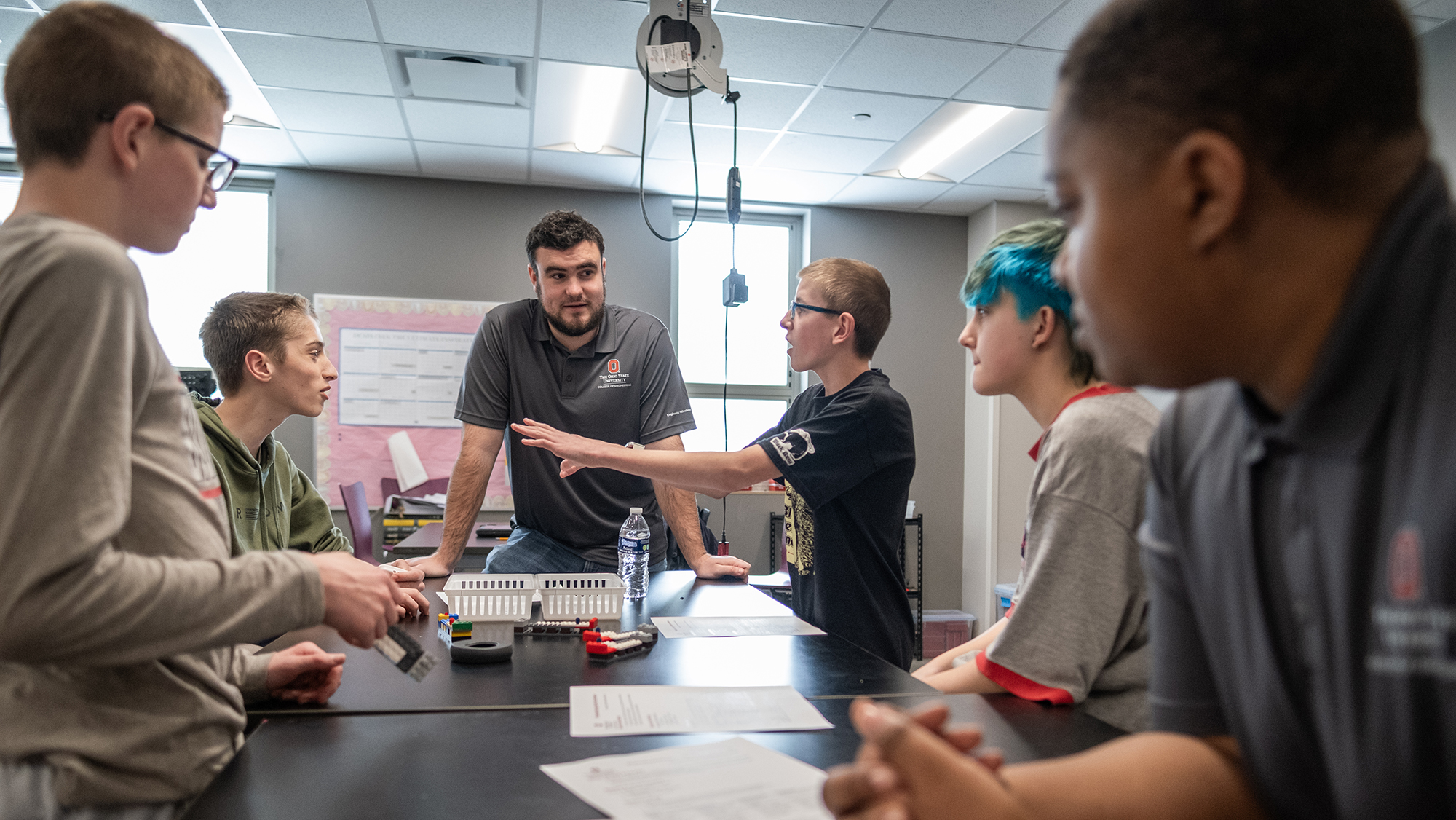
Under the guidance of club advisor Amber Rader, automation instructor and coordinator for the Engineering Technology major on the Mansfield campus, the Engineering Club members led the junior high students through exercises that demonstrate manufacturing processes. The Engineering Club members included Alex Rathburn, president; Colton Blevins, vice president; and members Oriyanna Bryant, Emir Sanchez and Tyler Wolf. The Regional Manufacturing Coalition funded the materials for their activity.
Assisted by the Ohio State students, Benjamin and his classmates worked in small groups, assembling a fictional product out of Legos to simulate a manufacturing assembly line. The Lexington students worked through several rounds, trying to improve their efficiency and ensuring quality each time.
“It was fun trying to get the process down and getting faster each round,” Benjamin said.
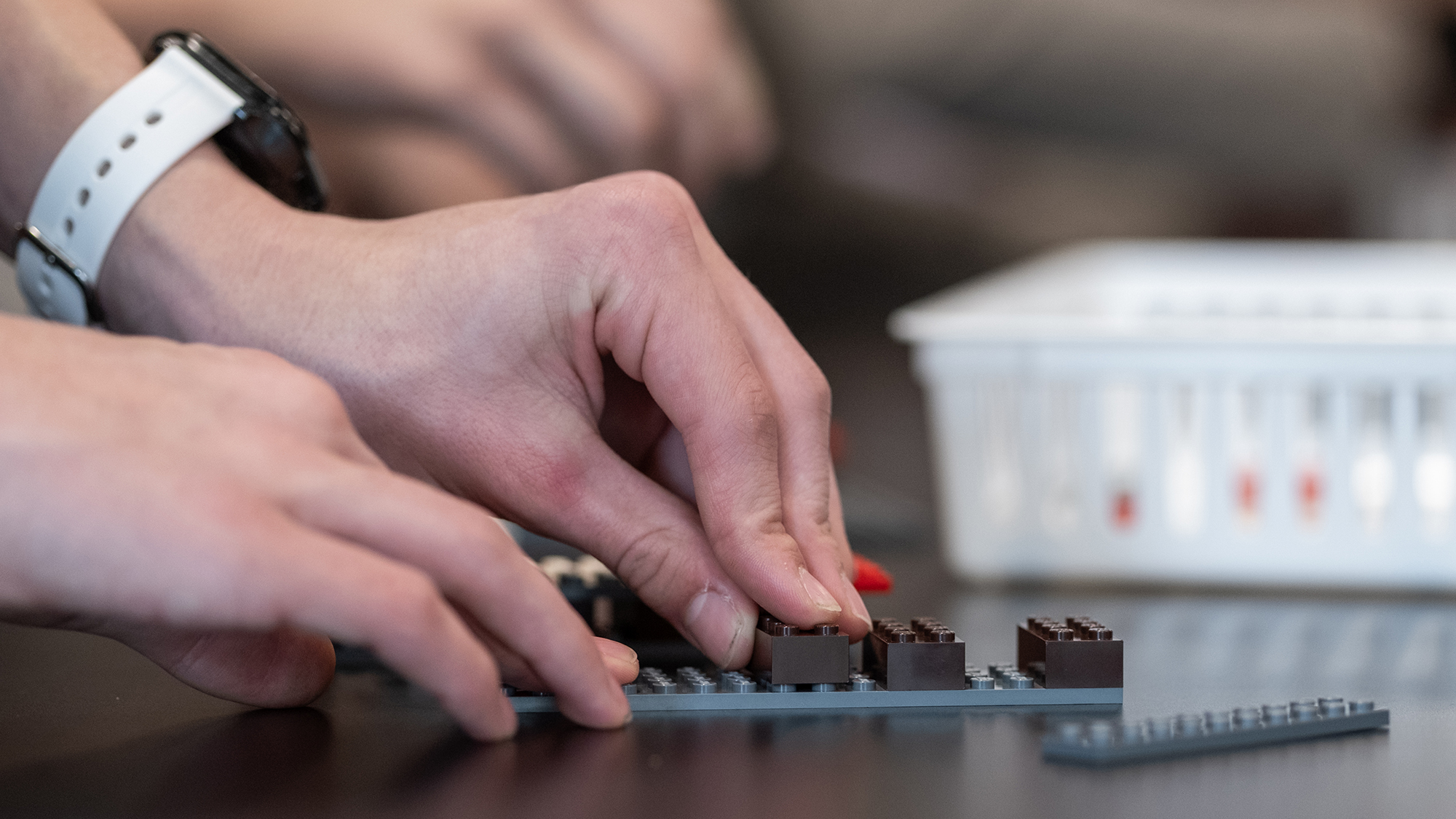
Both the Ohio State and junior high students benefit from working together to solve engineering problems, Rader said.
“For our students, it’s good experience to take what they are learning to younger kids. For the younger kids, it’s feeling a connection with college students who are maybe just a few steps farther than where they are,” she said. “Seeing the young people work with the other young people is a good thing.”
The demonstration helped the junior high students realize the option is open to pursue a career in manufacturing and other fields related to science, technology, engineering and mathematics (STEM), said Bruce Dewey, who teaches seventh grade at Lexington Junior High and is also a part-time instructor at Ohio State Mansfield.
“I think it opens up their eyes to some career possibilities that they might not know about,” he said, “actually seeing it in action, rather than just conceptual out of a textbook or just reading it online.”
The demonstration is designed to engage the students in hands-on learning activities that show how engineering concepts apply to manufacturing, Blevins said.
“I know when I was their age, I had no idea that you could go to college for robots and have fun with robots and programming, as well as administration roles,” he said. “They see a little bit of it now, and when they start getting into high school and people start talking about college, they’re going to remember this event. They’ll remember the engineering technology that we talked about and they’ll be like, ‘Okay, maybe I should look into this a little bit further.’”
Another goal of the manufacturing demonstration is to raise junior high students’ awareness that engineering not only encompasses manufacturing, but many other professions that pay well and provide substantial benefits, Rathburn said.
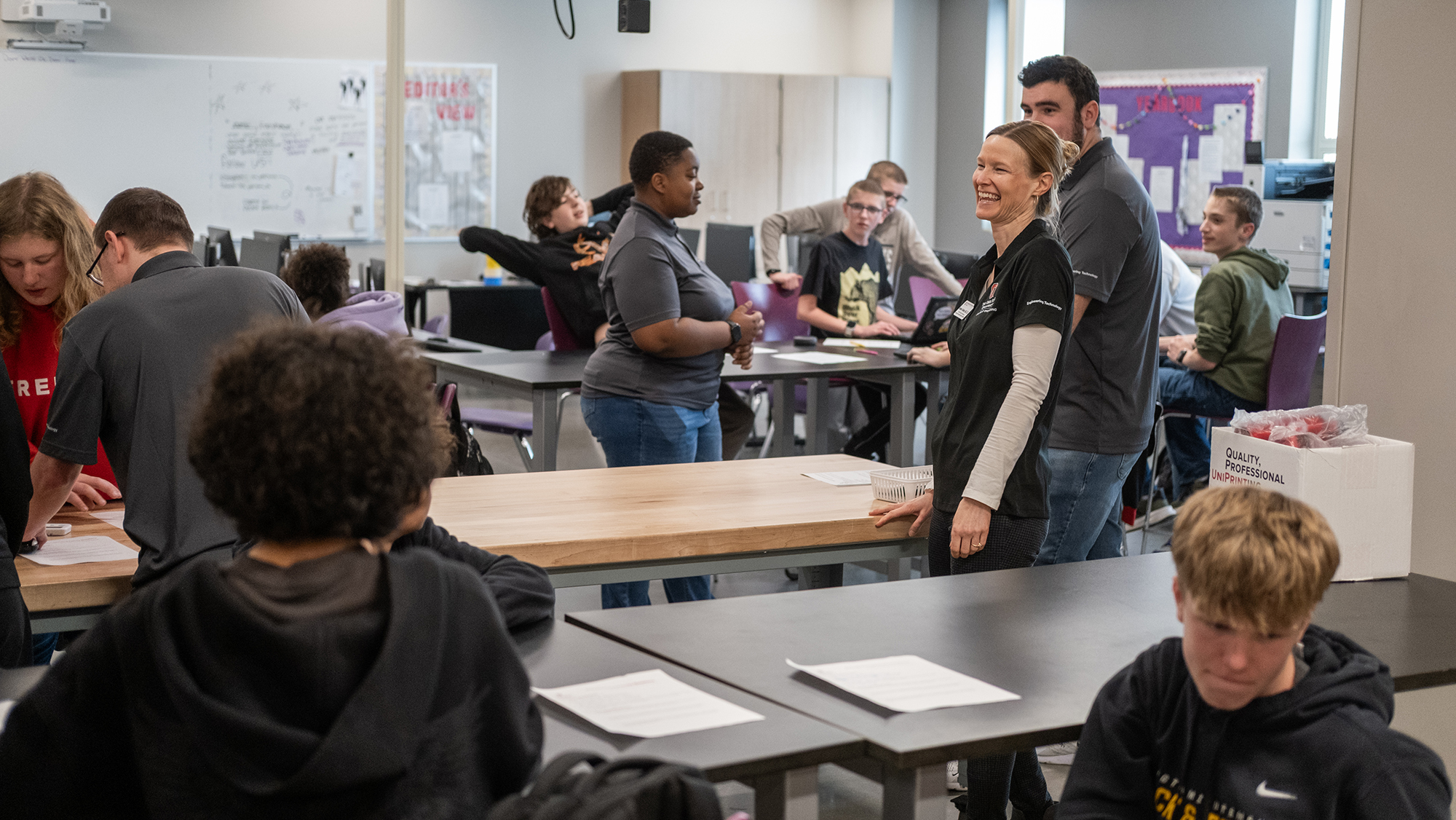
“A lot of people think it’s just numbers and boring stuff. You actually get to do a lot with engineering technology,” he said. “You get to work with big computers. It’s a lot of process-driven things.”
With each round of the manufacturing activity, the junior high students had to work together to decide how to improve their process, and many of them traded roles. Then they had to complete math problems based on their production rates and costs, so they could see the application of math in the activity. The exercise emphasized the advantages of developing a breadth of skills to succeed in the workplace.
“It was different people on different jobs,” Benjamin said.
By leading the demonstration, the Ohio State students practice managing workgroups and interacting with people from different backgrounds.
“It gets us involved with the community. It’s experience for us in teaching,” Blevins said. “Going into our careers, we will have people working underneath us and we will need to train them. They might not have the knowledge that we have, and we need to learn how to convey that to other people.”
The demonstration also emphasizes the importance of teamwork – for both the junior high and Ohio State students.
“A lot of companies are saying kids are used to working in isolation. We want to see future employees who can work together well on teams. And they’re doing a really good job with that,” Rader said. “There was some, ‘Oh, you did this wrong,’ or, ‘You did that wrong.’ But they’re dealing really well with conflict, and ultimately we’re trying to promote manufacturing. That’s the whole point of this project.”