
2026 William Oxley Thompson Alumni Award
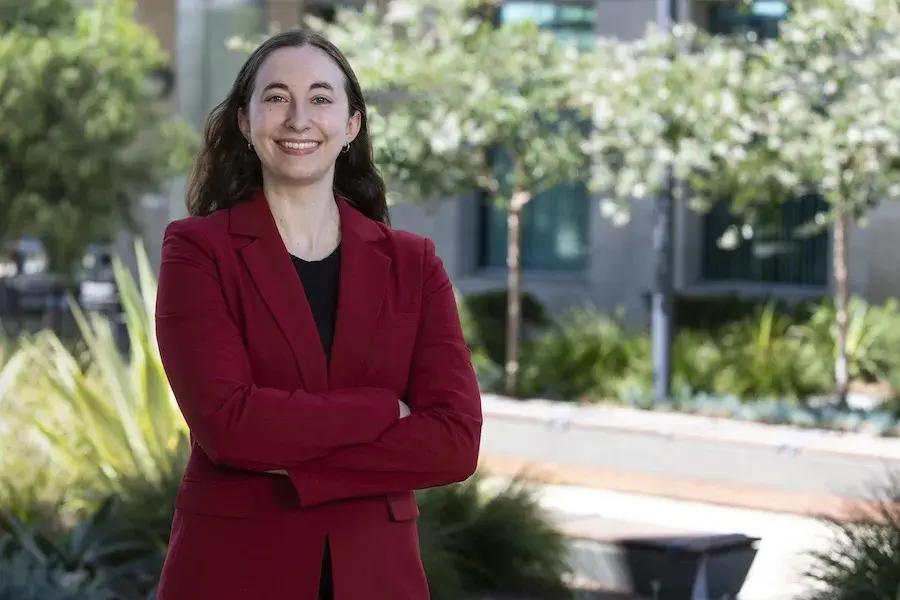
Maya Gosztyla ’18
Her curiosity grew into a career dedicated to tackling one of neuroscience’s biggest challenges: finding better ways to study the human brain.
For Maya Gosztyla ’18, the questions that drive her scientific career began with watching someone she loved slowly lose pieces of herself.
As a child, Gosztyla witnessed her grandmother battle dementia and saw the devastating impact it had on her life. “Brain diseases can take away a person’s memories, personality and identity,” she says. “You lose so much of what makes you who you are. I wanted to understand how these diseases happen and why we don’t have effective treatments for many of them.”
That curiosity grew into a career dedicated to tackling one of neuroscience’s biggest challenges: finding better ways to study the human brain.
Today, at 29, Gosztyla is co-founder and chief scientific officer of BrainStorm Therapeutics, a biotechnology start-up where she develops new approaches to treat neurological diseases including Alzheimer’s disease, Parkinson’s disease and epilepsy.
“Maya Gosztyla combines intellectual brilliance, research passion and entrepreneurial vision to accelerate treatments for neurological diseases, transforming innovative discoveries into hope for patients through her groundbreaking work.”
For decades, researchers have relied on animal models to study diseases. While those models have led to important discoveries, they don’t always reflect what happens inside the human brain, Gosztyla says. “A mouse would never naturally develop Alzheimer's the way a human does. It's not something that exists in its brain.”
Her team is working to develop more accurate tools in the form of tiny models of human brain tissue which allow researchers to study disease in ways that more closely mirror human biology.
“Think of them as tiny spheres of brain tissue,” Gosztyla says. Researchers use artificial intelligence to analyze data gleaned from these brain “organoids” to uncover new insights about the brain and identify new treatment options.
Her research recently earned her the Biocom Catalyst Award, recognizing her as one of California’s leading innovators under 40 in advancing human health.
Despite her success, however, Gosztyla says her work isn’t about awards. Instead, it’s about helping patients and families who are waiting for answers and better treatments.
One of Gosztyla's proudest accomplishments has been helping develop brain organoids using cells from children with CDKL5 deficiency disorder, a rare neurological condition that causes cognitive delays and severe seizures for those diagnosed. Those models allow researchers to study how each child's disease behaves and test treatments tailored to each individual.
Gosztyla credits Ohio State with launching her journey. As an honors student in molecular genetics and neuroscience, she had the opportunity to begin research as early as her freshman year under the guidance of faculty.
“Ohio State had a huge impact on my career and set me on the trajectory I’m on today,” she says. “The university supported me with research funding and scholarships that made it possible for me to pursue the work I loved while making my education affordable.”
Awarded to young alumni who have demonstrated distinctive achievement in a career, civic involvement or both. Nominees must be 35 years or younger.