Impact In Voices

Impact in voices
Investing in leadership, resilience and community impact
Read additional impact stories
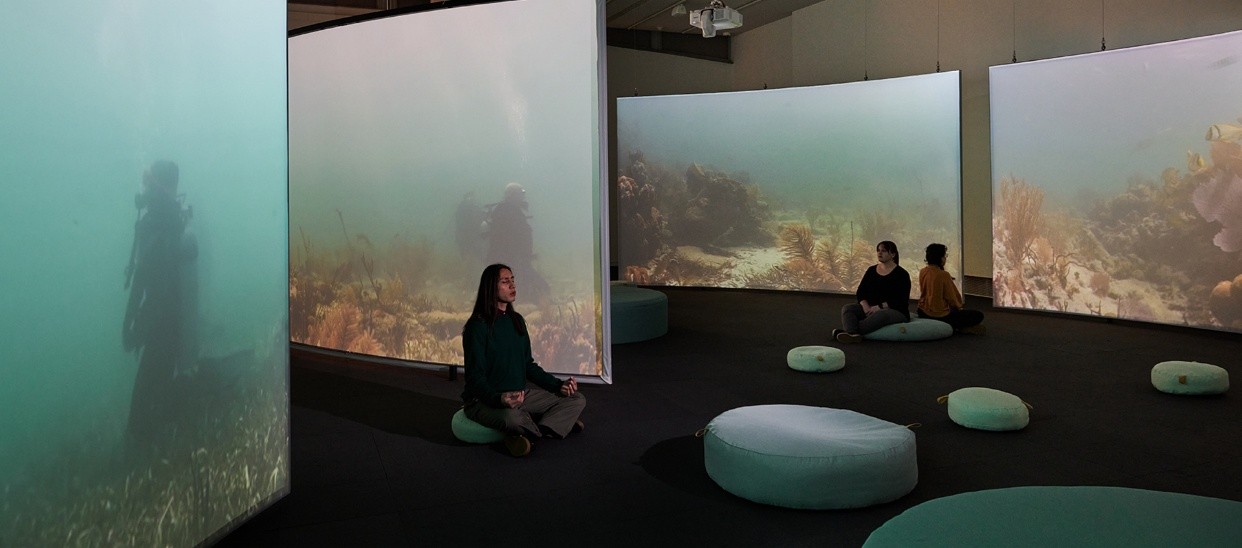
In 2021, thanks in part to the generous support of Women & Philanthropy, the Wexner Center for the Arts brought to life Meditation Ocean, a transformative, multi-sensory exhibition conceived by artist Hope Ginsburg. This immersive experience invited over 10,000 participants—from K–12 students and university scholars to families and community members—into a meditative underwater world where art, science and mindfulness converged. At the heart of the exhibition was M.O. Turtlegrass Meadow, a six-channel video installation featuring meditating scuba divers in Biscayne National Park, encouraging visitors to “breathe with” the ocean and reflect on their relationship with the natural world.
Beyond the gallery, Meditation Ocean rippled outward through a constellation of public programs, including artist talks, student workshops, interdisciplinary collaborations and a hybrid meditation series. These engagements empowered participants to explore climate science, environmental justice and personal well-being through creative expression and collective reflection. The project’s success underscores the profound impact of Women & Philanthropy’s investment in innovative, community-centered programming—demonstrating how art can be a catalyst for connection, healing and change.
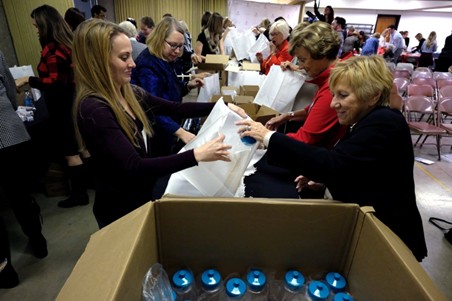
In 2017, Charitable Pharmacy of Central Ohio received a transformative grant from Women & Philanthropy at The Ohio State University. This funding enabled the organization to provide essential diabetes medications, self-care kits and personalized counseling to patients who otherwise faced significant barriers to care. Because of their grant award, Charitable Pharmacy was able to address immediate needs and develop online tools to support patients seeking information on how to access insulin and inhalers based on their specific needs.
The impact of this partnership extended well beyond the grant cycle. When the COVID-19 pandemic disrupted in-person services, Charitable Pharmacy adapted by launching curbside pickup and prescription mailing, all while continuing to educate and empower patients remotely. By providing blood pressure monitors and scales, patients were able to track their health from home—an approach that has since been validated by research showing improved understanding and medication adherence. The success of this initiative helped pave the way for the opening of a second pharmacy location in 2021 and inspired new community collaborations.
“Our partnership with Women & Philanthropy opened the door for other opportunities for partnership in the community. It demonstrated for us just how caring and generous a strong group of women can be, and encouraged us to explore additional community partnerships that could lead to better medication access and outcomes for our patients.” – Kristin Casper, Chair of the Division of Pharmacy Education and Innovation at The Ohio State University
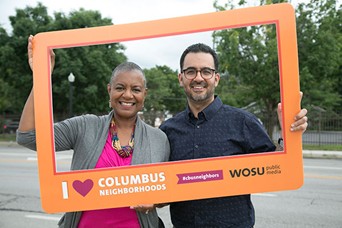
With support from Women & Philanthropy, WOSU Public Media was able to fully produce Seasons 2 and 3 of the Emmy® award-winning Columbus Neighborhoods television series. This funding, awarded in 2017, enabled the creation of 52 episodes between October 2017 and May 2019—ensuring the continuation of a beloved community engagement project that explores the past and present of life in Central Ohio. Originally launched in 2010 as a documentary series, Columbus Neighborhoods evolved into a weekly magazine-style program that highlights the people, places and stories that shape the region, while also serving as a resource for classrooms and public forums.
The grant made it possible to maintain the full 26-episode format for each season—something that would not have been feasible without this generous support.
“We are grateful to have funding that enabled us to make full 26-episode seasons for Seasons 2 and 3,” the team shared. “Without full funding we would have needed to cut back the episode count.”
The partnership with Women & Philanthropy not only preserved the integrity of the series but also amplified its impact, helping WOSU continue its mission of fostering community connection through storytelling.
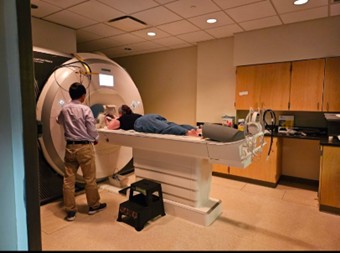
Thanks to the generous support of Women & Philanthropy, Dr. Zeynep Saygin, Associate Professor of Psychology & Neuroscience, has been able to push the boundaries of developmental neuroscience in extraordinary ways. With a $32,000 award received in 2023, Dr. Saygin launched a groundbreaking research initiative exploring the neurobiology of pre-literacy development.
“I have leveraged this amazing opportunity from Women & Philanthropy to extend my research program in numerous ways, including in fetal neuroimaging and predictive translational neuroscience,” she shared.
Her lab is now one of only a handful worldwide capable of collecting and analyzing prenatal MRI data, allowing her team to study how fetal brain development lays the foundation for higher-order cognition, including language development. This work has already led to the successful recruitment and scanning of approximately 70 fetal participants, with follow-up studies underway to assess their neural and behavioral outcomes as infants. Through innovative environmental interventions such as reading aloud and singing to babies before and after birth, Dr. Saygin is building predictive models that incorporate maternal stress, education and home literacy environments.
Since receiving the award, Dr. Saygin has published 10 peer-reviewed papers, delivered 8 invited lectures and mentored trainees who have presented 67 posters and talks globally. Her research is expanding into new areas, including the effects of preeclampsia, environmental pollutants and even head impacts on healthy neurodevelopment.
“The opportunities provided by the funding I received from Women & Philanthropy have been transformative. This is the type of research that one dreams about but never thought it would happen, and here we are doing it!” she shares.
In 2021, Women & Philanthropy members made a bold and historic investment in Alzheimer’s research by awarding its largest-ever single grant—$67,000—to Dr. Laurence Coutellier in the College of Arts and Sciences. That gift sparked a transformative journey into the early mechanisms of Alzheimer’s disease, with a focus on understanding why women are disproportionately affected. While the original goal of testing a gene therapy targeting Npas4 did not yield the expected therapeutic outcome, the project led to a groundbreaking discovery. A specific type of inhibitory neuron in the brain’s prefrontal cortex—the parvalbumin (PV) neuron—was found to be uniquely sensitive to Alzheimer’s in females. This insight offers a new lens through which scientists can explore the biological roots of women’s increased vulnerability to Alzheimer’s and opens the door to novel, sex-specific therapeutic strategies.
“This grant didn’t just fund a study—it ignited a new direction in Alzheimer’s research,” said Dr. Coutellier. “We now have a clearer understanding of how early changes in brain circuitry may contribute to cognitive decline in women, and that knowledge is a powerful step toward more effective treatments.”
The impact of this project extends beyond the lab bench; two undergraduate students were deeply involved in the research, gaining hands-on experience in neuroscience that helped propel them into medical school. Their journey is a testament to how philanthropy not only advances science but also shapes the next generation of medical leaders.
Building on these findings, Dr. Coutellier’s team is now pursuing advanced studies to understand how PV neuron hyperactivity disrupts brain function and contributes to cognitive decline. Using leading-edge tools like electrophysiology and chemogenetics, they aim to uncover new therapeutic targets that could slow or prevent Alzheimer’s progression. Thanks to the generosity of Women & Philanthropy donors, this research is not only changing the scientific conversation—it is laying the foundation for a future where Alzheimer’s can be understood, treated and ultimately overcome.
In 2010, Dr. Jessica Winters from Ohio State’s College of Engineering received a $28,620 grant from Women & Philanthropy to explore brain-mimetic materials for studying brain cancer. That early support helped lay the foundation for a transformative research journey, supporting her work as it evolved to focus on metastatic breast cancer to the brain using engineered materials to investigate how brain cells interact with cancer cells—either promoting or inhibiting their growth. Collaborating with experts at The Ohio State University Comprehensive Cancer Center – Arthur G. James Cancer Hospital and Richard J. Solove Research Institute, Dr. Winters is now working to uncover new therapies and diagnostic biomarkers that could predict and prevent brain metastases.
Her research took on personal meaning when, shortly after receiving the grant, Dr. Winters was diagnosed with breast cancer at age 35. Now nearly 15 years cancer-free thanks to treatment at The James, she continues to channel her experience into impactful science. Beyond her Women & Philanthropy-funded work, she launched Core Quantum Technologies in 2012 to commercialize cancer diagnostic tools using quantum dot nanoparticle reagents. The company began sales in 2020 after securing state, federal and venture capital support. Over the past decade, Dr. Winters has been elected to serve several prestigious organizations, including her current role on the Board of Directors for the American Institute of Chemical Engineers—a moving testament to a career shaped by resilience, innovation and a commitment to improving lives.
Thanks to the generous support of Women & Philanthropy, a pioneering research initiative aimed at transforming breast cancer diagnostics has made remarkable strides. The project, Meeting Technology Needs for Early Breast Cancer Detection, led by Dr. Asimina Kiourti, set out to develop a portable, low-cost imaging tool that combines microwave technology with deep learning to overcome the limitations of traditional cancer screening methods. With their grant funding, the team successfully simulated breast tumor scenarios in both 2D and 3D, implemented a fast microwave imaging algorithm capable of locating and monitoring both benign and malignant tumors and deepened their theoretical understanding of breast tissue imaging.
“I am deeply grateful to Women & Philanthropy for supporting my project,” said Dr. Kiourti. “Their investment empowered us to move from concept to tangible outcomes, and it strengthened our mission to create accessible, non-invasive tools for early breast cancer detection.” Among the project’s most exciting breakthroughs was the development of a neural network–based method to map microwave data to high-resolution CT scans—an approach now being extended to stroke monitoring. The team also created a framework for fabricating tissue-like phantoms to enable future in-vitro testing. “Ultimately,” Kiourti emphasized, “the people impacted are women everywhere, those who may one day benefit from earlier, more accurate and more affordable cancer diagnostics.” Women & Philanthropy’s support has not only advanced scientific innovation, it has laid the foundation for a future where lifesaving detection is more accessible to all.
With her grant award from Women & Philanthropy, Dr. Hollie Nyseth Nzitatira, professor and Director of Undergraduate Studies in Ohio State’s Department of Sociology, refined a groundbreaking model that predicts where atrocities such as genocide and mass violence are most likely to occur. Her work is helping governments and international organizations act before tragedy strikes.
“Atrocities continue to occur with alarming frequency, but we now know more than ever about the risk factors that precede them. This funding allowed me to refine a model that helps predict where these atrocities are likely—and that knowledge can save lives,” said Dr. Nzitatira.
The model has already made a global impact. It was used by the U.S. government until 2024 and shared annually with the United Nations. In March 2025, Dr. Nzitatira was invited to present her findings to the United Kingdom’s Foreign, Commonwealth & Development Office, where she now serves as a consultant on atrocity risk assessment.
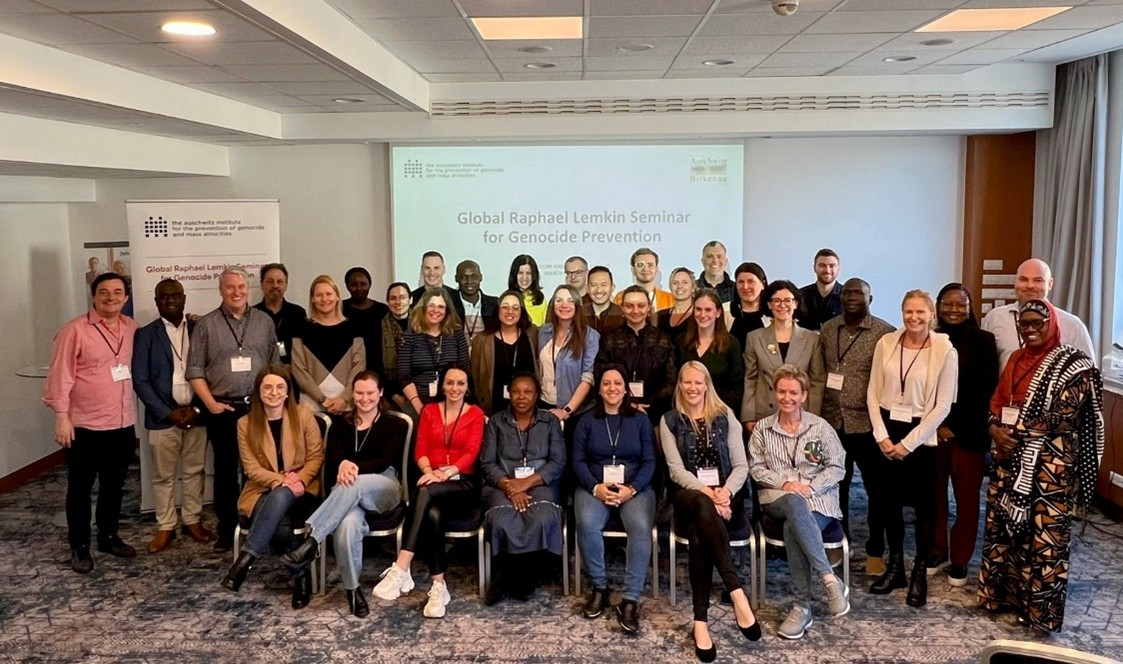
That same month, she trained government officials from around the world at the Global Lemkin Seminar held at Auschwitz. The seminar equips leaders with tools to assess and prevent mass violence. Dr. Nzitatira plans to continue collaborating with these organizations as a trainer, helping shape international policy and prevention efforts well into the future.
The grant also positioned her to secure a larger award focused on broader atrocity prevention strategies studying the effectiveness of responses like sanctions and exploring how transitional justice efforts can help prevent future violence.
Dr. Nzitatira’s work spans the full spectrum of atrocity prevention: from upstream prediction, to midstream intervention to downstream recovery and reconciliation. She is a leading voice in the field, serving as Global Editor in Chief of the International Association of Genocide Scholars Policy Brief Initiative and consulting with governments and nonprofits worldwide.
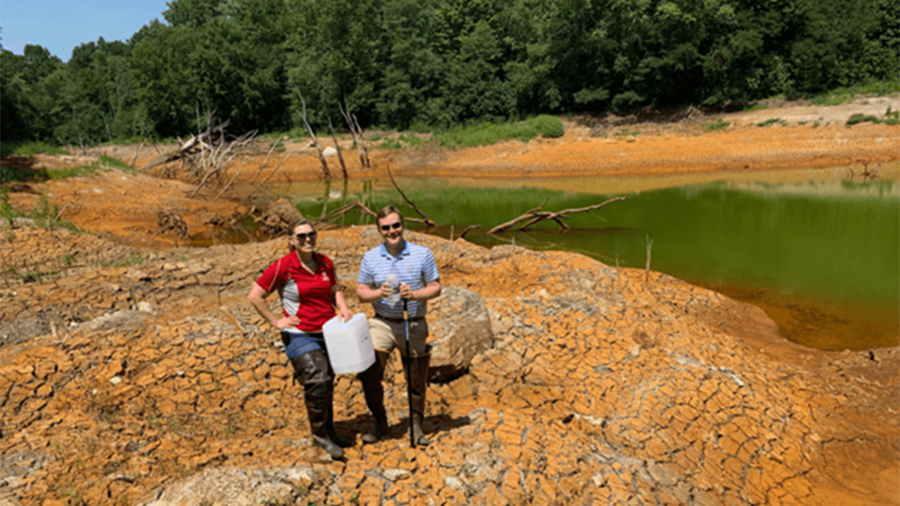
Women & Philanthropy’s investment in 2020 made a transformative difference for both research and student success. With a grant of $44,500, the organization funded a year-long project exploring how pervious concrete could filter and remove dissolved metal contaminants from water sources. This support covered tuition and a stipend for a graduate student pursuing a master’s degree in Food, Agricultural, and Biological Engineering, allowing them full focus on research rather than financial stress. As a result, the project generated robust data demonstrating the potential of pervious concrete to treat acid mine drainage—a persistent environmental challenge in rural Appalachian communities impacted by historical strip mining.
The outcomes of this research have been remarkable. Testing revealed that pervious concrete could remove up to 99% of aluminum, copper and iron, and 40% of manganese from water, while also neutralizing acidic pH levels. These findings suggest a low-cost, effective solution for improving stream, wetland and lake habitats in regions affected by mining pollution. The study culminated in a peer-reviewed publication, advancing knowledge in environmental engineering and inspiring further innovation. Building on the initial project success, the researchers have since secured additional funding to scale the technology and test it in real-world conditions at The Wilds in Southeast Ohio, with ongoing refinement planned through collaboration with visiting scholars.
The human impact was equally significant. Our grant supported two graduate students and five undergraduates, providing hands-on research experience that strengthened academic and career trajectories. For example, one student leveraged this work to gain admission to a top engineering master’s program, while another completed an honors thesis tied to the project. Beyond individual achievements, the initiative fostered collaboration among faculty and industry partners and sparked interest among local leaders. While pervious concrete had fallen out of favor in central Ohio due to durability concerns, recent adoption of pervious paver systems may reflect growing awareness of its environmental benefits—an outcome this project helped influence.
Leading this effort was Dr. Lisa Burris, Associate Professor of Civil, Environmental, and Geodetic Engineering and a College of Engineering Innovation Scholar. Dr. Burris’ research focuses on increasing the sustainability of concrete construction through novel supplementary and alternative cementitious materials for infrastructure like bridge decks and pavements. Her expertise in understanding the relationship between hydration and durability of concrete mixtures was critical to the success of this project. Under her guidance, the team not only validated pervious concrete’s ability to remove pollutants but also laid the groundwork for future applications that make concrete more sustainable, efficient and widely adopted.
Impact in photos